Workers Don't Have to Die in the Heat
California's heat protections for workers decreased heat-related deaths by 31% in recent years. With deaths climbing around the United States, extending these protections throughout the country could save as many as 1,500 lives each year.
On a blistering day in May 2008, seventeen-year-old farmworker María Isabel Vásquez Jiménez was tying grapevines in a vineyard outside Stockton, California, when the temperature crept past 100 degrees Fahrenheit. It was only her second day on the job. She was two months pregnant and, according to investigators, had little access to shade or cool drinking water. After hours beneath the sun, she fainted.
Rather than call an ambulance, supervisors drove her to a parking lot, where her fiancé tried to revive her with a wet cloth. By the time she reached a clinic, her body temperature had climbed to 108 degrees Fahrenheit. Two days later, she was gone.
Part of the tragedy was that California's laws should have kept María alive. In 2005, California passed the nation's first heat standard — a policy that required water, shade, and rest breaks for outdoor workers. María's death showed that such words on paper were not enough and spurred California to ratchet up enforcement efforts in 2010.
With these reforms in place, employer compliance increased and heat-related fatalities dropped sharply. Our research found that California's heat standard decreased deaths by 31 percent and may have prevented roughly thirty-four worker deaths every year from 2010 through 2020. With death rates climbing around the United States, extending these protections to workers throughout the country could save as many as 1,500 lives each year.
The findings are urgent because extreme heat has become one of the most dangerous and least regulated workplace hazards in America. Heat-related workplace deaths have more than doubled over the past twenty-five years, a trend driven by rising temperatures that place growing numbers of workers at risk.
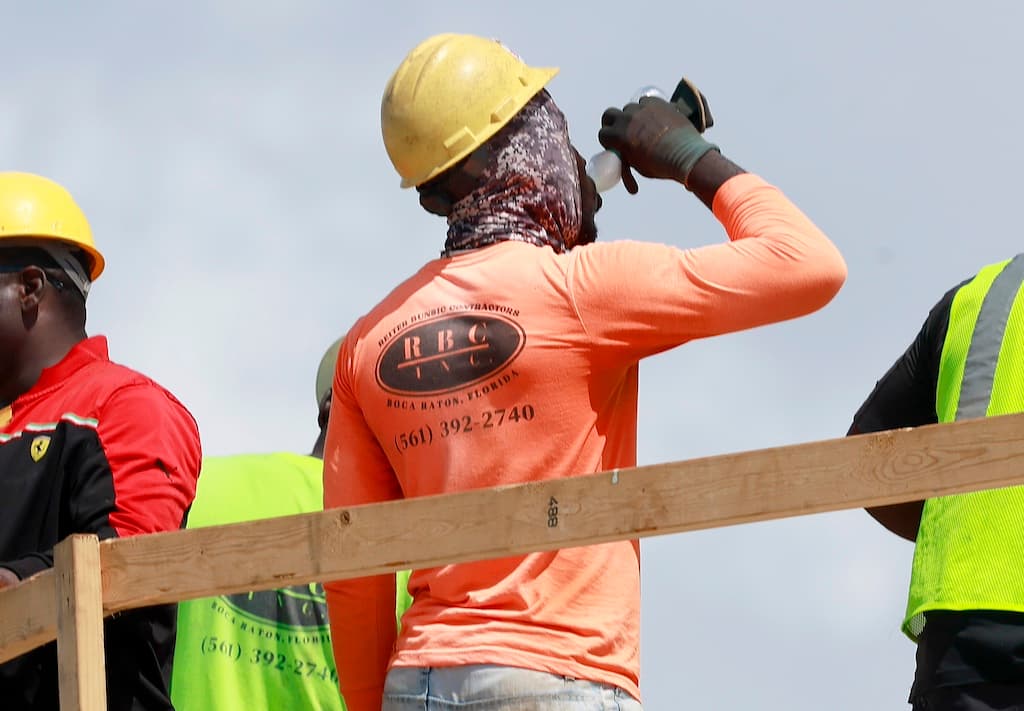
Outdoor workers who harvest our crops, pave our roads, and collect our trash now labor under conditions that grow more punishing each year. Agricultural workers alone are roughly thirty-five times more likely to die from heat exposure than the average US worker. In 2021, at least thirty-six workers died from environmental heat exposure, according to federal statistics, though public-health experts believe the true toll is far higher because heat often triggers heart failure, vehicle crashes, and other fatal events that go uncounted.
The history of California's heat standard holds crucial lessons about what works to protect outdoor workers and leaves them vulnerable. Although California acted early to protect outdoor workers, for several years, those protections were poorly enforced, and heat-related deaths did not fall. What changed first was not the law but the people who demanded that the law mattered. In the days after María's death, her family and supporters refused to let her story fade. They led a six-day march with the United Farm Workers from Lodi to the state capitol, Sacramento, demanding accountability and an end to preventable deaths in the fields.
Public pressure soon expanded. In 2009, the UFW filed suit arguing that the heat standard was being widely ignored. The case drew scrutiny to the state's inaction and helped prompt officials to increase heat-season inspections in 2010. According to our analysis, that shift marked an inflection point when California's heat standard began to reduce deaths.
Still, violations persisted. A second lawsuit, filed in 2012 by unions and worker-rights advocates, again highlighted widespread noncompliance. Their continued organizing helped set the stage for a 2015 settlement requiring faster inspections during heat waves, a focus on repeat offenders, and greater ability for workers to report abuses. That same year, California revised the standard itself, clarifying temperature thresholds, strengthening access to water and shade, and improving monitoring.
After these changes, California's heat standard may have reduced heat-related deaths among outdoor workers by roughly half compared with neighboring states, even as heat waves worsened. The comparison is striking. From 2015 to 2020, heat-related worker deaths increased 43 percent in California, reflecting a warming climate. But in states next door without strong protections, they surged 114 percent. The difference wasn't the weather — heat rose everywhere — but California's heat standard.
As 2026 begins, governments at the state and federal level are starting to follow California's lead. Since 2022, five states — Colorado, Nevada, Oregon, Washington, and Maryland — have passed new heat standards. Strong standards like the one Maryland adopted in 2024 closely mirror California's standard and rely on clear temperature thresholds, proactive inspections, and meaningful involvement from workers and their representatives. Weaker standards like the one Nevada adopted that same year lack a clear temperature threshold that would aid enforcement and, like California's heat standard before 2010, are less likely to protect workers.
At the federal level, the Occupational Safety and Health Administration (OSHA) has long failed to provide comprehensive protections against heat-related risks on the job. The Biden administration began the federal rulemaking process in 2021 and proposed a nationwide standard that mirrors many of the effective protections required in California. But the current Trump administration halted the pending rulemaking in 2025 and then stripped inspection targets from OSHAʼs heat enforcement program. These moves will replace proactive oversight with voluntary compliance as extreme heat grows more deadly, failing to prevent tragedies like María's.
None of this is complicated. Providing shade, cool water, and rest breaks is inexpensive and, in many cases, already required by state law. These measures protect productivity as well as people. Yet countless outdoor workers — especially immigrants and low-wage laborers — still lack such basic safeguards. Many fear retaliation if they speak up.
Seventeen years after María's death, her body lies in Mexico. But a white cross still stands on the side of a busy road in Stockton, marking the spot where she collapsed. Its inscription is both elegy and indictment: "María collapsed from a heat stroke and no water access. This is in her name and of those others who have lost their lives at work. We demand justice and respect; no more abuse to workers and to future generations."
As millions now work through record and rising heat, some will not make it home. The country must decide whether such deaths remain a routine cost of harvesting food and collecting our trash, or whether the most basic protections — water, shade, and rest — will finally be treated not as charity but as law. Whether we act now determines how many more crosses will be planted in the years to come.