US company to buy Brazilian rare earth miner Serra Verde for $2.8 billion
The deal places a Goiás mine at the center of America's push to build a rare earth supply chain outside China, as Brazil still debates how to govern the sector.
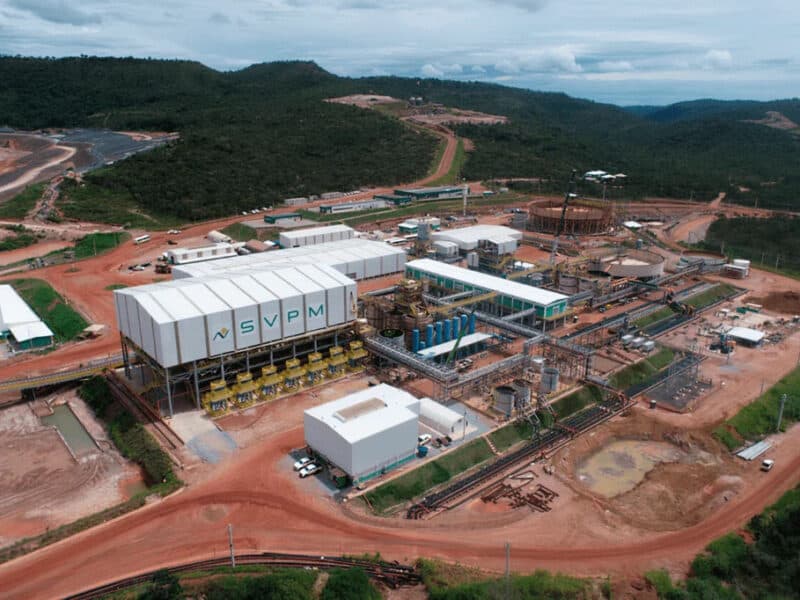
RIO DE JANEIRO (CN) — USA Rare Earth announced Monday a $2.8 billion deal to acquire Serra Verde Group, owner of the Pela Ema rare earth mine and processing plant in Goiás, Brazil.
The deal comes as U.S. interest in Brazil's critical minerals gains political weight while Brazil is still trying to define how to regulate, license and govern the sector.
In recent weeks, twobills introduced in Brazil's lower house proposed creating a state-owned company focused on rare earths and critical minerals, amid a broader debate over sovereignty, value-added production and the role of foreign capital in the mineral supply chain.
Rafaela Guedes, a senior fellow at the Brazilian Center for International Relations, said the acquisition reinforces Brazil's role as a key territory for diversifying the global supply of rare earths outside China, but it does not automatically turn the country into an industrial leader.
"The main risk is remaining restricted to the role of raw material supplier and, at most, reaching the production of rare earth concentrate," Guedes said. "If Brazil does not establish clear guidelines for adding value, innovation, technological capacity and coordination between mineral and industrial policy, it risks negotiating asset by asset instead of from a national position."
Under the terms announced by the company, the transaction includes $300 million in cash plus 126.8 million newly issued shares of USA Rare Earth. The deal is expected to close later this year.
The deal covers the full acquisition of Serra Verde Group, owner of the Pela Ema mine in Goiás and the processing plant associated with the project.
Serra Verde said in a statement it will remain a Brazilian company and continue operating the Pela Ema mining and processing project under the leadership of its president, Ricardo Grossi. It also said that, because of the nature of the transaction, no regulatory approvals are required in Brazil.
In a statement, USA Rare Earth said the combination is expected to create an integrated rare earth platform spanning mining, processing, separation, metallization and magnet manufacturing across Brazil, the United States, the United Kingdom and France.
The deal also includes a 15-year supply agreement for part of Serra Verde's production to a special purpose vehicle capitalized by U.S. government agencies and private capital, with minimum prices for neodymium, praseodymium, dysprosium and terbium. Before the transaction, Serra Verde had been exporting its production to China.
Guedes said the deal reflects a U.S. effort to accelerate the buildout of a Western rare earth supply chain less dependent on China through public financing, vertical integration and the acquisition of strategic assets outside U.S. territory.
"More than securing access to the ore, the U.S. is trying to reorganize the supply chain around its strategic interests," she said.
Guedes said the main shift is not exactly the mine's nationality, since Serra Verde already had foreign capital before the deal. "The difference is that the Brazilian asset is now being placed more explicitly within a vertical integration and supply security strategy aligned with U.S. industrial and strategic interests," she said.
On the regulatory side, Brazil's National Mining Agency told Courthouse News it does not see the transaction, at this point, as involving a transfer of mining rights.
Guilherme Filardi, a partner at São Paulo-based DDSA Advogados, said the legal effect of the transaction depends on how it is structured in Brazil.
He said that if the deal is structured as an acquisition of corporate control over the company holding the rights, without changing the legal entity that holds the mining rights before the National Mining Agency, there would be no automatic transfer of the mining title.
Filardi said the situation changes if the transaction involves assignment of the title, a merger, incorporation, spin-off or another corporate reorganization that legally changes ownership of the concessionaire.
He added that even in a pure share deal, the transaction would still require mining-regulatory review, possible antitrust clearance from Brazil's antitrust authority, as well as attention to environmental, foreign exchange, registry and foreign investment issues associated with the closing.
Courthouse News reporter Marília Marasciulo is based in Brazil.