'Unaccompanied': Migrant kids spent months languishing in foster care as their parents fought to get them out
Inside a New York Cayuga Centers foster facility, six children who crossed the border to reunite with their families say staff used threats of deportation to discourage them from misbehaving — or complaining about the conditions.
MANHATTAN (CN) — On a third-floor conference room in a law office in Kew Gardens, Queens, 8-year-olds Eymi and Stiven listlessly spun in their swivel chairs as their older siblings and cousins recounted how they got there.
It was a harrowing journey — by car, by canoe, but largely on foot — that took them from Ecuador to the jungles of Colombia, to the southern U.S. border, then up to New York City where the six children, ages 3 to 15, believed their parents had been working for the past several years to send money back home.
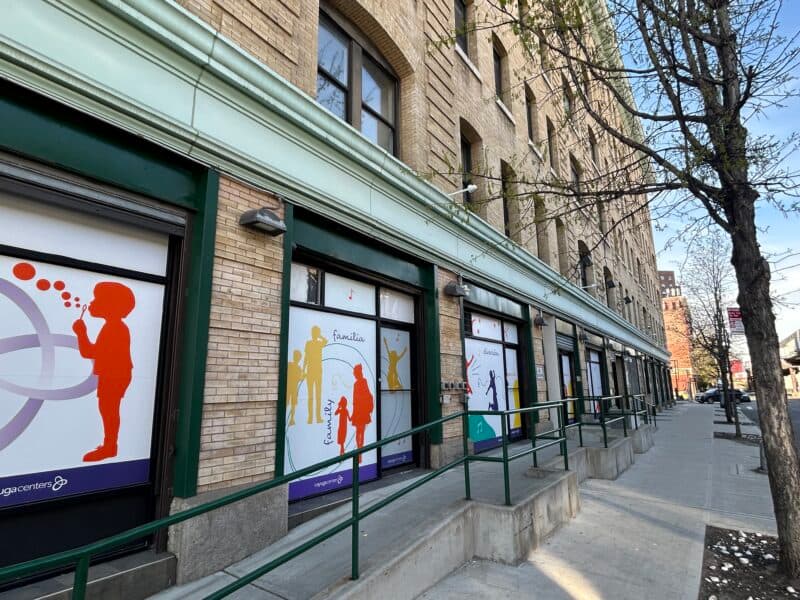
Once in New York, the kids found themselves facing another long wait. They were put in the custody of Cayuga Centers, a more than 170-year-old nonprofit foster care organization that has become one of the largest care providers in the United States for "unaccompanied alien children," or UAC. It was there the children say they were piled into a Harlem apartment housing more than a dozen kids, where they were forbidden to talk to the others and barred from going outside.
"In four months, they took us outside only two times," Jhon, 13, told Courthouse News through a Spanish translator at the Queens office of Kerben Law Firm PLLC.
The group's parents, who said they were allowed limited visitations, claim in court filings their kids appeared distressed. Their clothes were dirty and their meals were insufficient, they say.
They also claim Cayuga staff threatened their children, saying if they broke the rules or complained too much about the conditions, their parents would be deported.
But most pressing, the family argues that despite quickly and repeatedly proving their identities to the Department of Health and Human Services, which contracts and regulates programs like Cayuga, the agency refused to release their children for several months. They say it wasn't until they hired an immigration attorney and filed habeas corpus petitions on behalf of the kids that the government agreed to hand them over — once HHS agreed to "expedite" DNA tests to confirm the relationships.
The family's attorney, Reuben Kerben, fears these six children are far from outliers. According to HHS data, the amount of time unaccompanied migrant kids are spending in the agency's custody has skyrocketed during the second Trump administration, up to an average of 117 days in 2025 from just 30 days in 2024. In 2023, that number was 27 days.
Kerben said he's already heard from other families who, like his clients, say they're being held by HHS in systems like Cayuga for much longer than expected.
"I've represented literally thousands of immigrants, including hundreds of immigrant children," Kerben said. "I've never had any parents have to jump through so many hoops to get their kids back."
In the fall of 2025, the adults in the family didn't know the six children were embarking on the treacherous roughly 3,000-mile trip from Ecuador.
The kids say the expedition was born from necessity. Their grandmother, who looked after them while their parents worked to provide for the family, became ill and unable to care for them. One night, burglars targeted their house.
"That's when I decided to come over here with all my cousins," said Lizeth, the oldest of the bunch at 15. "My parents didn't know that we were coming."
With some money from her grandmother and some logistical help from a friend, Lizeth said she led Eymi, her younger sister and their cousins on a mission to find their parents.
The toughest leg, the children all agreed, was a span of infamous jungle between Colombia and Panama. Commonly known as the Darién Gap, the roadless stretch of rainforest is known as a dangerous part of any South American migrant's journey to the U.S. Its extreme terrain and remoteness makes it one of the most inhospitable regions on Earth.
The kids slept outside, constantly fearful of the creatures that populated the jungle around them. Jhon said they heard either a bear or a puma during their trek through the rainforest; he wasn't quite sure which one.
"We were scared. There were a lot of animals," Lizeth said. "And we were scared that the police would catch us and send us back to Ecuador."
When the children reached the Texas border this past November, they told Customs and Border Protection agents they were looking for their family in New York City. Lizeth said they were promptly taken there and transferred to the custody of HHS — the department that handles care for unaccompanied immigrant minors.
"After that, they gave us vaccines and they contacted our parents," Lizeth said.
The kids were placed in a Cayuga Centers facility in East Harlem on Nov. 22, 2025, where they were to stay until HHS greenlit their release to their family. According to Kerben, that process tends to be simple; once a parent is found, HHS will verify their identity through passports or birth certificates, and the children are released.
"It's usually a fairly quick situation," Kerben said.
It was anything but for these six children. Kerben said the parents were located shortly after the kids were in HHS custody, and that the parents were in "full compliance" with the agency's asks at every turn. They provided proof of parentage, completed fingerprinting and filed sponsor applications.
Despite that, the family claims the agency kept moving the goalposts. The kids stayed in Cayuga, still marked as "unaccompanied," even though their parents were willing and able to take custody of them.
"This case presents a straightforward but urgent question," the families said in the kids' habeas petitions. "How can the government continue to detain a child after determining he should be released? The answer is that it cannot."
As the parents waited for HHS to approve their documentation, they described contact with their children as "extremely limited." When they could visit, what the parents saw troubled them.
Maykel, 11, had dirty clothes and shoes, according to his mother Maria, who said she visited him every 15 days while he was at Cayuga. She asked a social worker why her son smelled.
"That's normal," Maria said she was told. Jhon and Maykel said they were left in charge of the laundry — including that of the house mother.
Jhon lamented the lack of time outdoors, particularly during New York City's major snowstorms, which he watched from the apartment's windows. The parents say the extended indoor confinement was "extremely harmful" to their children and "caused significant distress."
Nights were long, the kids said. Bedtime was around 8 p.m. They often weren't allowed up until late the next morning. They said they were barred from using the bathroom at night.
The meals were "inadequate," according to the parents.
"Breakfast was not provided until approximately 10-11 a.m., and dinner often consisted only of cereal or bread with milk," they claim in court filings.
Throughout their four months at Cayuga, threats of deportation loomed large. Lizeth said they were told they could get "deported with their parents" based on their behavior or if they voiced concerns. As a result, the parents say they, too, were discouraged from making complaints about the conditions, fearful their kids would face repercussions.
"[Lizeth] used to tell me that other people in there mentioned that, if you say something to your parents, the next day they will be in Ecuador," Lizeth's dad, Jose, said. "She used to ask me, 'Please, don't say anything.'"
Kids who did speak up were called names by staff, like "chismoso," or tattletale, and "hablador," or gossiper, they said.
As Jose tried to get his kids out of Cayuga, he said he was often left hanging by HHS and the foster center. He seemed to get a different answer each time he asked how long the process would take, hearing everything from a week to nine months. In court filings, the parents chalked the wait up to "interagency delay."
All in all, the six children spent more than 120 days in the facility, quadruple the national 2024 average — and significantly longer than the 43-day average stay in Cayuga — but right on par with the latest figures from Donald Trump's second term.
In a statement to Courthouse News, HHS suggested the longer waits are by design, but declined to comment about Cayuga or these children's experience.
"The Office of Refugee Resettlement (ORR) is committed to ensuring the safety, well-being, and appropriate care of all unaccompanied alien children in its custody," said department press secretary Emily Hillard. "This includes releasing children only to properly vetted sponsors. ORR will not expedite vetting to release UACs, unlike the Biden Administration, which prioritized the quick release of children to insufficiently vetted sponsors over the children's safety."
Kerben said the vetting process hasn't substantially changed between administrations.
Cayuga has more than 20 locations around the country, according to its website. But when it was founded in 1852, it was a single modest foster home in Upstate New York.
It started taking "unaccompanied" children during a surge of arrivals in 2014, which also came with a surge of federal cash. In the past 12 years, Cayuga has been awarded more than $744 million in funding from HHS for its unaccompanied children and refugee assistance programs, public records show. It's now one of the largest providers of this care in the country.
A 2018 report from the Associated Press found that 900 migrant children were under Cayuga's care at the time; the nonprofit's website says it can accommodate 500 unaccompanied kids at any given point.
But it's unclear how many are there today — a representative at Cayuga declined to provide a figure or comment on the kids' claims against the foster center.
Kerben says he's in touch with other families in the same situation as his clients. The six children have since been released to their family in Corona, Queens. But Kerben is continuing to litigate their habeas cases in hopes of protecting others like them, resisting the government's effort to quash their petitions.
"If this petition is mooted out, any similarly situated people basically have to relitigate the same issues," Kerben said. "What I really want is this judge to make a decision that, once parents have been identified and there are no red flags, to release the kids to their parents."
Jose described the burden and anxiety of having his children spend months in this system. From the perilous journey to the U.S. to the treatment inside, he fears the experience has traumatized his children and nephews in ways he can't yet understand.
"I know they suffered pain, and there's a lot of things they haven't mentioned yet," Jose said. "They don't know how to express it."