Trial wraps against American woman accused of IS training
Prosecutors' case hinged on a lone handwritten document that defense attorneys say is fake.
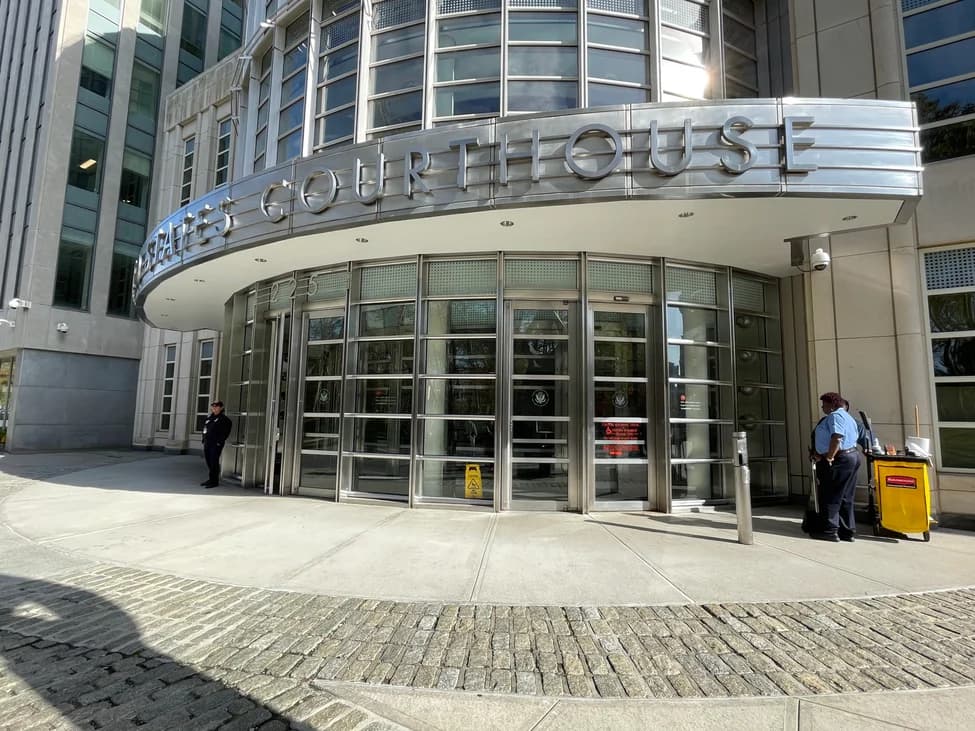
BROOKLYN (CN) — As trial winds down against Halima Salman, a Brooklyn-born woman whose father brought her into Islamic State group territory when she was 17 years old, her attorney on Thursday meticulously picked apart the government's scant evidence seeking to prove that Salman received military training with the terrorist organization.
After first moving his wife and nine children to Turkey in September 2016, Salman's father brought the family into IS territory in Syria, and shortly after Salman turned 18 years old, arranged for her to be married to an IS fighter. On the stand last week, Salman, a soft-spoken 27-year-old whose family has come to support her in court throughout trial, testified that she didn't know where she and her siblings were headed until she awoke in a van surrounded by armed men.
"For the last 10 years, Halima Salman has been through hell and back," defense attorney Mia Eisner-Grynberg of the Federal Defenders of New York told jurors.
For two years, as Salman described it, she lived in the tight grasp of IS, unable to leave her home without her husband, a German-Afghan man named Abu Ali, and forced to cook and clean for Ali and his mother.
Outside, there were "bombs everywhere," Salman said — and by the time she was brought to a detention camp in spring of 2019, as IS fighters surrendered to to the U.S.-backed, Kurdish-led Syrian Democratic Forces, there were also "dead bodies everywhere."
Salman remained detained in northeast Syria for five more years until her mother secured repatriation for the family in May 2024. Instead of rejoining her U.S.-born family when she got off the plane at JFK airport, however, Salman was arrested and charged with knowingly receiving military-type training from a foreign terrorist organization.
"This man told her she's coming home," Eisner-Grynberg said, gesturing toward FBI special agent John Maurer, who interviewed Salman in Syria before she and her family flew back to the U.S. "It was a lie. It was a trap."
During the seven-day trial, prosecutors introduced one document that purportedly indicates Salman trained with an all-female IS battalion known as Nusaybah Katibah and was authorized to receive an AK-47 and ammunition. Before and throughout trial, U.S. District Judge Natasha Merle declined to exclude the document but characterized it as "weak."
Eisner-Grynberg argued Thursday that the document is fake, noting among other factors that it is unstamped, while other IS documents presented at trial each have official stamps with a date and location, and that it was found only as a photo on Ali's phone, not within IS records.
The defense attorney also pointed out prosecutors did not bring in any witnesses who claimed to have seen Salman at a training — or even that Nusaybah Katibah held any trainings in the IS-controlled area where she and Ali lived.
Assistant U.S. Attorney Amanda Shami posited to jurors in her own closing argument on Wednesday that Salman had "choices" and had opted to pledge loyalty to IS.
"ISIS did not make women get training. Women want training from ISIS," Shami said. "The defendant had choices, and she chose to get training from a violent terrorist organization.
"The defendant's father was an ISIS fighter. Her husband was also an ISIS fighter. And the defendant herself wanted to be an ISIS fighter," Shami said.
Shami also pointed jurors to a handful of text messages in which Salman told Ali she loved him to counter Salman's testimony that the marriage was difficult — an argument that Eisner-Grynberg called "shameful" in her own closing.
Prosecutors in fact wanted to take it a step further, seeking to introduce selfies of Salman smiling while with Ali as part of their rebuttal case, but after fierce objection from defense counsel, Merle did not admit the photographs.