Texas prisoner wins Supreme Court review in self-represented petition
A Texas prisoner's rare successful pro se petition sought clarification on applying the First Step Act, an issue the justices have repeatedly ruled on in recent years.
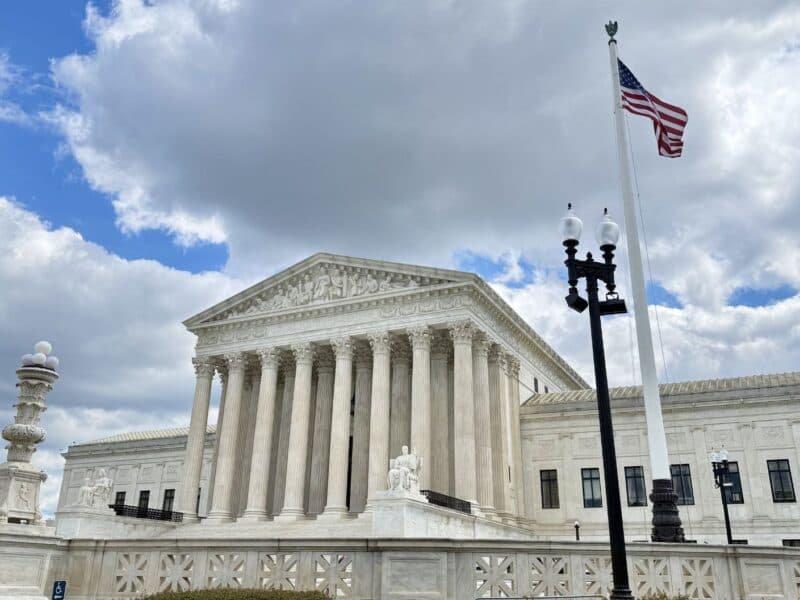
WASHINGTON (CN) — The Supreme Court granted an appeal from a Texas inmate on Monday who represented himself as he sought transfer from prison to home confinement.
William Maxwell's case is one of many asking how a 2018 criminal justice reform law should be squared with prior statutes governing relief for federal prisoners. But his successful pro se petition marks a rare occurrence at the high court where specialized litigators more often take center stage.
Maxwell was sentenced to 20 years in prison for a 2014 racketeering conspiracy seeking to take over FirstPlus Financial Group, a Texas-based mortgage loan company. In 2020, he asked to be transferred to a halfway house or home confinement, citing his good time credit under the First Step Act.
The Fifth Circuit denied Maxwell's request, holding that such relief wasn't available through a habeas petition because he wasn't eligible for accelerated release. In Melot v. Bergami, the Fifth Circuit established its bright-line rule that prisoners seeking to reduce their level of custody without accelerating their release must bring claims through a civil rights suit instead.
However, Maxwell wouldn't have faced a similar hurdle if his case was before the First, Second or Third Circuits, which allow prisoners to bring habeas claims to reduce their level of custody.
Maxwell highlighted the divide — known as a circuit split — in his petition at the Supreme Court. He also claimed the Fifth Circuit's rule violated the high court's habeas rules in Jones v. Hendrix.
"Because the Fifth Circuit's 'bright-line rule' conflicts with the holdings of this court and the holdings of nine other circuits, as well as disenfranchises thousands of inmates housed in Texas, Louisiana and Mississippi from any relief when the Bureau of Prisons miscalculates their sentences based on errors in parole calculations, First Step Act calculations or other placement errors, certiorari is warranted and correction needed," Maxwell wrote.
After repeatedly delaying its response, the federal government claimed Maxwell's petition should have been denied because he failed to exhaust administrative remedies.
Maxwell's initial pro se petition was supplemented by a brief from attorneys with Davis Polk and Paul Weiss. They said leaving the Fifth Circuit's rule in place would hamper federal prisoners' ability to vindicate errors that improperly increase their level of custody. They emphasized the practical consequences of the circuit conflict, noting one in every six federal prisoners are incarcerated within the Fifth Circuit's jurisdiction.
"This court's intervention is needed to ensure that a large portion of the nation's prison population is not subject to a rule that the government itself admits is wrong and irreconcilable with this court's precedents," attorneys with Davis Polk and Paul Weiss wrote.
The justices' grant comes after a decision last week holding that the First Step Act couldn't be used to expand circumstances where courts can reduce a prisoner's sentence under the compassionate release provision. In 2024, the court weighed in on qualifications for a safety valve provision in the law.