Starmer staves off revolt over Mandelson vetting scandal
The prime minister admits "wrong" judgment but blames officials for withholding critical security advice as critics across Parliament question his leadership and judgment.
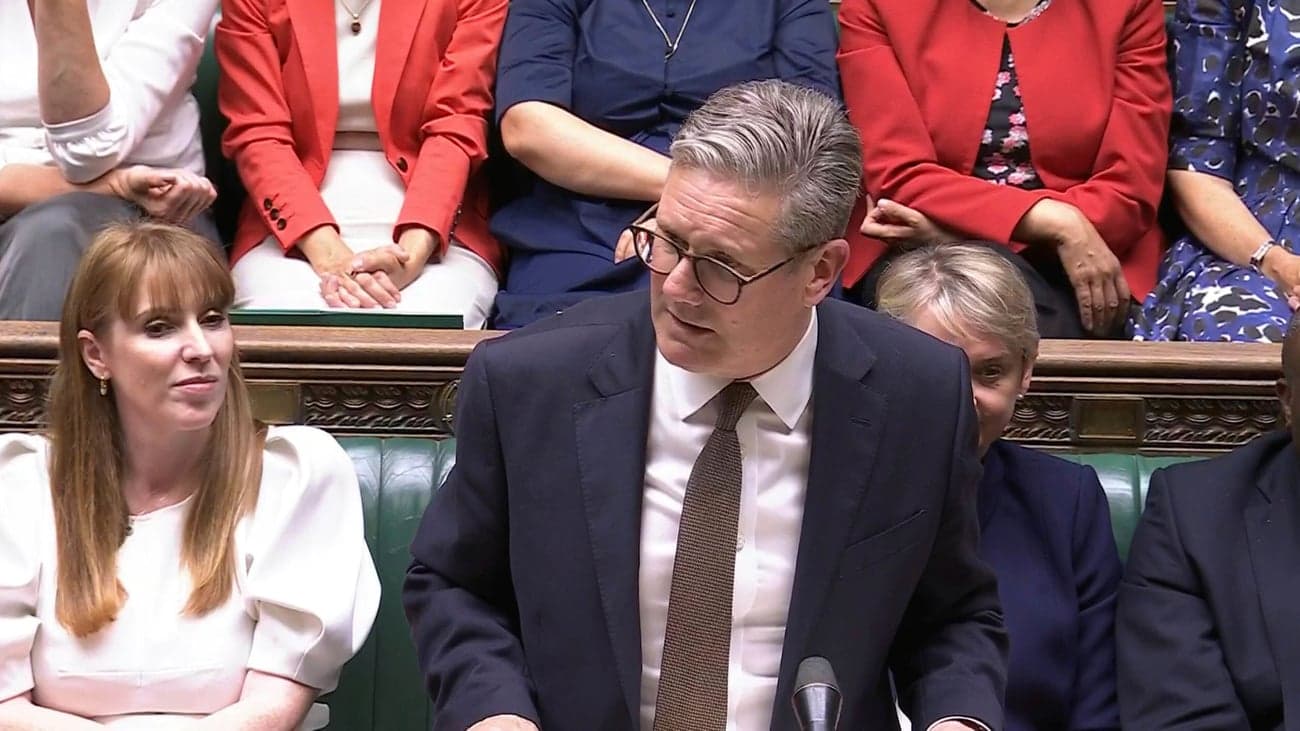
MANCHESTER, England (CN) — Prime Minister Keir Starmer apologized to lawmakers Monday for appointing Peter Mandelson ambassador to the United States, admitting his decision was "wrong" while forcefully blaming civil servants for withholding key security concerns in a heated Commons showdown.
Starmer insisted he would not have appointed Mandelson had he known security officials recommended denying him clearance.
Mandelson was sacked last September after the release of emails deepened scrutiny of his ties to convicted child sex offender Jeffrey Epstein.
In February, police arrested him on suspicion of misconduct in public office linked to allegations he shared sensitive government information. He was later released but remains under investigation. He denies any criminal wrongdoing.
Starmer admitted that at the heart of the process, "there is also a judgment I made that was wrong. I take responsibility for that decision, and I apologize again to the victims of the pedophile Jeffrey Epstein, who were clearly failed by my decision."
The House of Commons session centered on Britain's security vetting system, a background check process required for sensitive government roles.
In the U.K., ambassadors are often appointed before vetting is complete, a practice Starmer said he has now changed.
The prime minister told lawmakers that the U.K. Security Vetting agency recommended rejecting Mandelson's clearance after checks conducted between Jan. 23 and Jan. 28.
Despite that, Foreign Office officials approved the clearance the following day.
The precise reasons why UKSV recommended denying Mandelson security clearance have not been publicly disclosed.
"It beggars belief that throughout the whole timeline of events, officials in the Foreign Office saw fit to withhold this information from the most senior ministers in our system, in government," Starmer said. "That is not how the vast majority of people in this country expect politics, government or accountability to work."
Starmer revealed he only learned on April 14 that officials had overridden the vetting agency's recommendation. He said "a deliberate decision was taken to withhold" that information despite multiple chances to disclose it.
A key flashpoint in the session was whether Starmer had misled lawmakers, even unintentionally, about Mandelson's vetting.
Before the Commons showdown, Downing Street had struck a more cautious tone, saying officials were examining whether ministers, having been given incorrect assurances about the process, may have "inadvertently misled Parliament."
But pressed directly in the chamber, Starmer rejected that characterization.
Scottish Conservative lawmaker John Lamont asked whether he accepted that he had "inadvertently misled the House of Commons," after making statements that "have now turned out not to be true" about the vetting process.
"No, I did not mislead the House of Commons," Starmer replied. "I accept that information that I should have had, and information that the House should have had, should have been before the House, but I did not mislead the House."
Starmer also criticized senior officials for allowing the foreign secretary to sign off on a statement claiming the vetting followed standard procedure without disclosing the failed recommendation, calling the decision "absolutely unforgivable."
On Friday, the Foreign Office's top civil servant, Olly Robbins, was effectively sacked after losing the confidence of Starmer and Foreign Secretary Yvette Cooper.
Robbins had led the department since January 2025 and oversaw Britain's diplomatic service.
Opposition lawmakers and critics within his own party focused less on the process and more on Starmer's judgment.
Conservative leader Kemi Badenoch accused him of shifting blame.
"The prime minister has thrown his staff and his officials under the bus," she said, adding that Starmer had fired multiple senior aides "for a decision he made."
She also questioned his curiosity about Mandelson's past, saying he "asked no questions about Mandelson's relationship with Epstein" and "didn't even speak to Peter Mandelson before his appointment."
Liberal Democrat leader Ed Davey drew comparisons to former Prime Minister Boris Johnson, telling lawmakers that Starmer had failed to meet his own standards of honesty and accountability.
Criticism also came from Labour's left flank.
Lawmaker Diane Abbott said the issue was not what Starmer knew but why he did not ask more questions. "It's one thing to say … nobody told me. The question is, why didn't the prime minister ask?" she said.
Former Labour leader Jeremy Corbyn pressed the same point, asking why Starmer "didn't ask any questions whatsoever about the nature of the security clearance that Mandelson had achieved."
Starmer repeatedly returned to his central defense: that key information was withheld. "A deliberate decision was taken to withhold that material," he said. "This was not a lack of asking. It wasn't an oversight."
The tense session also saw a rare intervention from the speaker of the House of Commons, Lindsay Hoyle, who ordered right-wing Reform UK lawmaker Lee Anderson to leave after he refused to withdraw a claim that Starmer had lied, an accusation that is barred under parliamentary rules.
Hoyle later removed another lawmaker, Zarah Sultana from the left-wing Your Party, after also accusing the prime minister of lying.
The three-hour session underscores mounting pressure on Starmer, who has a clear majority in Parliament yet is engulfed by multiple controversies and political opposition that includes many in his own party.
The Mandelson scandal further threatens his position by raising questions about his judgment not only in appointing him but in how closely he scrutinized the process that led to the decision.
By the end of Monday's session, Starmer had contained immediate calls for resignation, but disquiet remained visible across the Commons, with Labour forecast to face huge losses in key local elections on May 7.
Courthouse News reporter James Francis Whitehead is based in England.