Sotomayor rips colleagues for turning blind eye to child custody tug-of-war
Failing to stay the daughter's removal from the U.S. left the high court no choice but to deny the mother's certiorari petition, Sotomayor said.
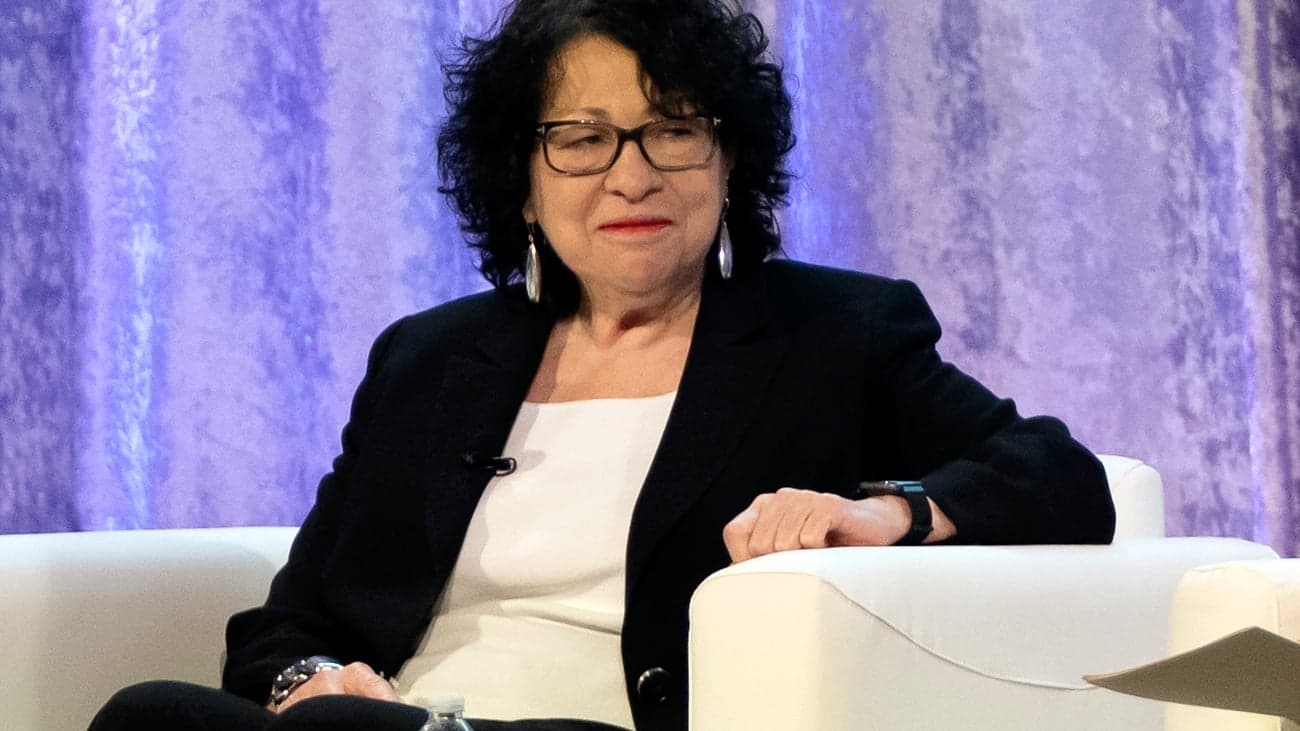
U.S. Supreme Court Justice Sonia Sotomayor chastised her fellow justices Monday morning for failing to stay the removal of a Venezuelan child amid an international child abduction debacle— a decision that ultimately led to the separation of the child and her mother.
In 2021 Venezuelan mother Samantha Castro left for the United States with her three-year-old daughter, A.F., without the consent of A.F.'s father, Jose Guevara.
Upon discovering the abduction of his child, Guevara immediately contacted Venezuelan and U.S. authorities to seek A.F.'s return, but did not file a lawsuit in U.S. federal court until 2023.
However, Guevara did not immediately find the legal aid he sought: in May 2024, a federal judge in Texas denied Guevara's petition for the return of his child.
In her ruling, U.S. District Judge Ada Brown — a Donald Trump appointee — cited the Hague Abduction Convention, a multilateral treaty establishing international regulations to expedite the return of children wrongfully taken by one parent to another country.
Under the convention, a country must return a child to their home country if a parent in the country of origin requests return within one year. However, if a request is filed more than one year after the abduction, the child may be permitted to remain in their new country if a judge finds the child is settled in their new environment.
According to Brown, A.F. had become settled in the Dallas area, meaning she could not be removed to Venezuela.
"[Castro] has met her burden of proving by a preponderance of evidence that A.F. is well settled in her new environment in Texas," Brown wrote. "Thus, it is no longer in the best interests of A.F. to return to Venezuela, where she has minimal connections and no memories of living there."
In May 2025, however, a three-judge Fifth Circuit panel reversed, finding A.F.'s young age and uncertain immigration status were not conducive to being well-settled. The panel ordered A.F. returned to Guevara in Venezuela.
Seeking to keep her child in the U.S., Castro sought an emergency stay from the Supreme Court. Her efforts were unsuccessful: the court denied her petition in November 2025, and A.F. returned to Venezuela in January.
In a last-ditch effort, Castro filed a petition for writ of certiorari, hoping the Supreme Court would rule in her favor. On Monday, however, the court denied the petition.
Providing a statement on the decision, Sotomayor wrote Monday that granting the petition was no longer "an appropriate vehicle" for the court's review. Because A.F. had already been removed from the U.S., the Barack Obama appointee wrote, extending the litigation would only create further disruptions for the child.
"Even if this court were to grant the petition for certiorari now and rule for [Castro] next term, A.F. likely would not return to the United States for over a year, if not longer, given the court's typical schedule for deciding cases and the possible need for further proceedings on remand," Sotomayor wrote. "By that point, the well-settled analysis would look very different. Then, it would not be clear that returning to this country a year from now would be in A.F.'s best interests."
However, Sotomayor noted it did not have to be this way.
"Had the court granted a stay last fall, it would have prevented all this potential disruption and maintained the present status quo because A.F. vould have stayed in the United States pending the disposition of this case," she wrote. "The court should have done so: Preserving the pre-suit status quo to enable later review by this court of an issue worthy of certiorari, after all, is a hallmark reason for this court to grant emergency interim relief."
Expressing dissatisfaction at the court's prior decision to deny an emergency stay, Sotomayor described denying the certiorari petition as the best option amid unfortunate and avoidable circumstances.
"The court chose otherwise, and the predictable consequences have followed," she wrote. "I therefore concur in the denial of certiorari in light of these changed circumstances and the Hague Convention's central emphasis on the child's well-being."
A spokesperson for the firm Duane Morris, representing the mother, called the court's decision disappointing.
"Our client is devastated by the Supreme Court's denial of certiorari and its decision not to hear her case. The court's denial will have lasting, real-world consequences for vulnerable children and families seeking safety and permanence. We are profoundly disappointed by the court's decision," the spokesperson said.