Ninth Circuit says Hawaii does not have to publicly release voter rolls
The Public Interest Legal Foundation said the appeals panel's decision against it was still a win as it opened up standing and ripeness issues it could continue to pursue.
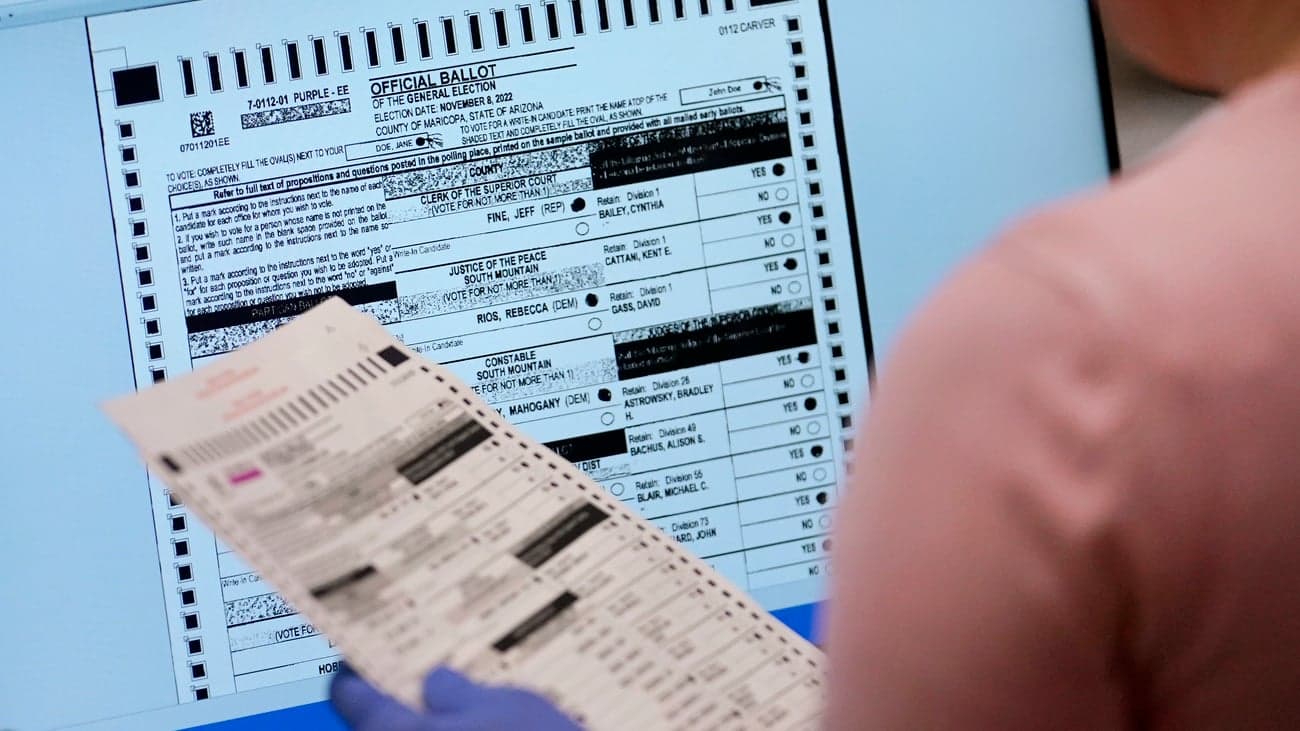
(CN) — A Ninth Circuit panel said Tuesday that Hawaii is not required to publicly disclose voter registration data, ruling against a conservative election integrity foundation's efforts for a list of the Aloha State's registered voters.
The Public Interest Legal Foundation claimed that Hawaii's Chief Election Officer Scott Nago violated the National Voter Registration Act by refusing to hand over the state's voter roll to the foundation.
But a statewide voter list is not a record that concerns the implementation of programs that ensure the accuracy of lists of eligible voters under the act, U.S. Circuit Judge Michelle Friedland, a Barack Obama appointee, wrote in the opinion.
"Covered 'records' are those about efforts to ensure the accuracy of voter lists, not voter lists themselves," Friedland wrote. "NVRA is not a sprawling voter-data-preservation mandate; it is a transparency provision targeted at list-maintenance activities."
Friedland was joined on the panel by U.S. Circuit Judge M. Margaret McKeown, a Bill Clinton appointee, and U.S. Circuit Judge Jennifer Sung, a Joe Biden appointee.
Though the panel denied the voter rolls to the foundation and sent the case back to the lower court to dismiss, Joseph Nixon, an attorney for the Public Interest Legal Foundation said ruling was actually a win.
Nixon, who argued the case in the court of appeals in October, said that the appeals panel's decision that the foundation had standing and that the case was ripe were more important than decision the merits of the case.
"All of those things point to us winning," Nixon told Courthouse News.
The court ruled on an argument that the state didn't make, he said.
"That is that the statewide voter roll that we asked for is not a document covered under the NVRA," he said. "Every court to have considered that issue until now has ruled that the statewide voter roll is a document covered under the NVRA."
The foundation can appeal a potential dismissal of the case when it's back in the District of Hawaii, or it can take the case to the U.S. Supreme Court, Nixon said.
"I know it might sound a bit odd, but we're very pleased with this opinion," he said. "We have lots of options. We haven't decided this yet."
The panel noted in its decision that it disagreed with other appeals court's interpretation of what is considered a covered document under the act.
"The First Circuit's interpretation collapses the textual distinction between administrative records reflecting implementation of list maintenance activities and the lists those programs maintain. Its interpretation gives too much weight to the words 'all' and 'concerning,' failing to take account of the surrounding limiting context," Friedland wrote.
The foundation says it requested the voter registration data from the state Office of Elections in April 2023 and was denied. It recommended that the foundation request the information from Hawaii's four counties instead.
The foundation then sued Nago in September 2023, claiming that Hawaii was conducting its elections in secrecy.
Senior U.S. District Judge Leslie Kobayashi, also an Obama appointee, dismissed the foundation's lawsuit for lack of jurisdiction and also found that the foundation's claim was unripe because it had not yet attempted to retrieve the voter data from the counties.
But the foundation maintains that the county election offices aren't responsible for the state's voter roll. It's the state, it says.
The foundation appealed the federal court's decision in 2024.
"The court said every single document possessed by the state of Hawaii for which the voter roll is comprised is covered under the NVRA and is discoverable — just not the voter roll," Nixon said of today's decision. "How do you know if they're doing their job right if you don't have the ultimate document?"
Nixon said that almost all other states have complied with the Public Interest Legal Foundation's requests for voter data and that it was time for Hawaii to do the same.
Neither the Hawaii Office of Elections nor the Hawaii Attorney General's Office immediately responded to requests for comment.