Justices set up SEC win over investor harm showing
The justices' questions suggested a victory for the federal regulator against a California man who racked up millions through securities fraud might only be temporary, leaving a larger war over fraud remedies on the horizon.
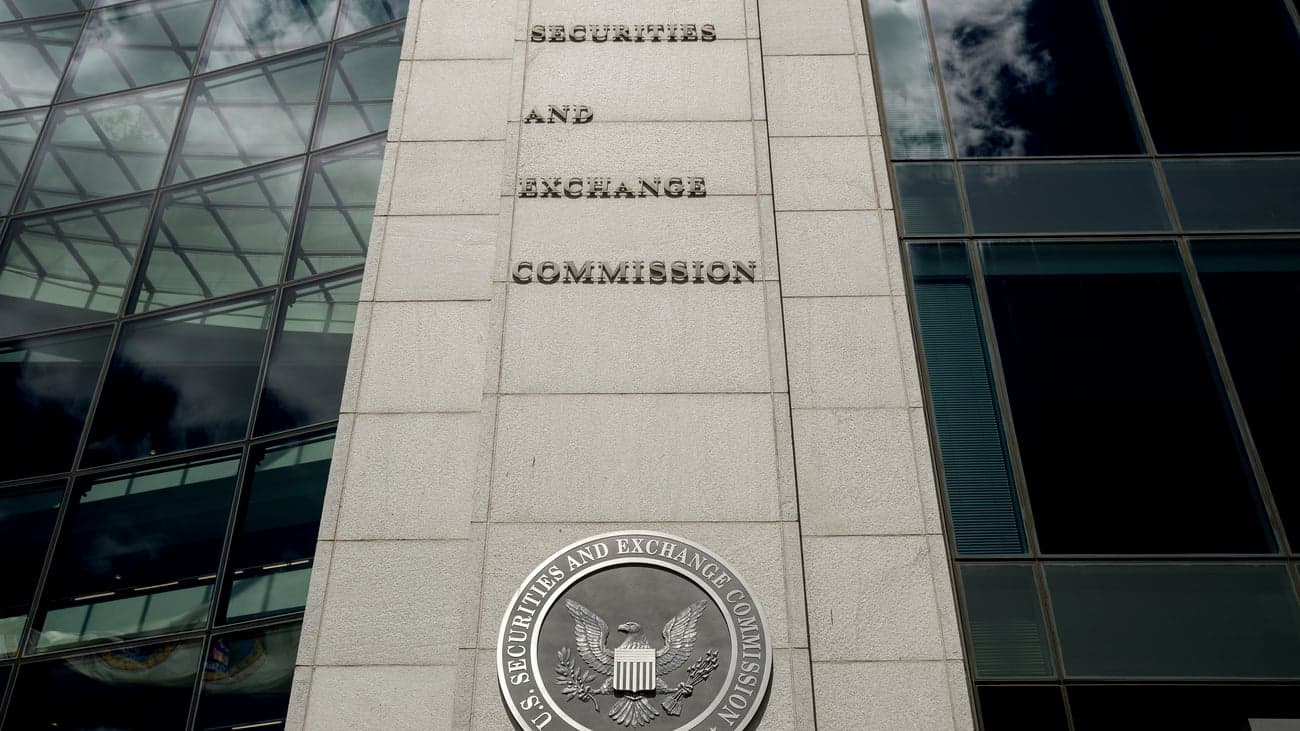
WASHINGTON (CN) — The Supreme Court seemed inclined to give the government regulators a win against a securities fraudster on Monday.
"Counsel, assume you're losing," Justice Sonia Sotomayor, a Barack Obama appointee, told Ongkaruck Sripetch's attorney. "Which of the two arguments would you like to lose under?"
Under a nearly century-old law, the Securities and Exchange Commission can ask federal courts to strip wrongdoers of any unjust enrichment obtained through securities violations. Sripetch tried to fend off such a suit by challenging the agency's authority to require repayment without drawing a direct line to the victims harmed by his scheme.
He told the court that without that link, the agency was going outside its statutory authority. But the justices appeared unconvinced that such a showing was necessary to secure profit-based remedies.
"Why is it a punishment if we're not taking anything more from the defendant than he unlawfully gained?" Justice Ketanji Brown Jackson, a Joe Biden appointee, asked.
Sripetch was involved in fraud schemes involving penny-stock companies — low-priced, high-risk equity securities without a well-developed market. The government claimed he sold unregistered stocks and engaged in manipulative "match" trading.
A court ordered Sripetch to pay over $2 million in disgorgement — the term for divesting of ill-gotten gains — and an additional $1 million in prejudgment interest.
Sripetch pushed the justices to overturn the disgorgement order, claiming the SEC had to show that investors experienced pecuniary harm. Justice Samuel Alito, a George W. Bush appointee, said the investors' harm was already front and center.
"Wasn't the aim of the scheme that your client admitted … to obtain [money] from the people who bought the artificially pumped-up stocks?" Alito asked Sripetch's attorney. "In other words … wasn't it his intent to make them victims?"
The Trump administration said Sripetch wanted the court to adopt the narrowest possible conception of a victim to make it difficult for the SEC to obtain disgorgement awards.
"[Sripetch] would fundamentally transform the disgorgement remedy from one that is designed to deprive the defendant of ill-gotten gains and is measured by profits into a compensatory remedy in which the measure of recovery is losses to the victims," Malcolm Stewart, deputy solicitor general at the Justice Department, said.
While the SEC seemed to win the day, the court signaled skepticism over the broader regulatory scheme. Several justices questioned whether the agency had authority to keep disgorgement funds instead of distributing them to victims.
The government said in certain scenarios, it was impractical to distribute such funds. An example would include broad schemes that inflict small harms on many people. Those situations could result in administrative costs that exceed the victims' damages.
Stewart argued that distribution wasn't a requirement, but he claimed the SEC distributes around 80% of collected disgorgement funds.
But Justice Neil Gorsuch, a Donald Trump appointee, suggested that without distribution, it could no longer require disgorgement without a jury trial.
"If you want the equitable remedy, you've got to behave," Gorsuch said, calling Stewart's argument "pretty perilous."
Gorsuch said the fund recipient mattered because that was the point where the government's legal remedy turned into a penalty.
"If you want a legal penalty, then the Seventh Amendment might have something to say about it," Gorsuch said.
Sotomayor shared her colleague's concerns.
"The Seventh Amendment issue looms large because the government is keeping the money and not paying over to victims as compensation," Sotomayor said. "Then it serves only one purpose: deterrence. And if it's only deterrence, I think you have a much harder way to go to say that it's not a Seventh Amendment violation to let the judge decide it."
But Gorsuch noted the court could reserve that question for another case, and Sotomayor suggested ruling on a section of the statute that avoided such concerns completely.