Justices' book deals disarm SCOTUS in music copyright case
The justices' penchant for off-the-bench writing left the Supreme Court without the ability to put pen to paper in a copyright dispute.
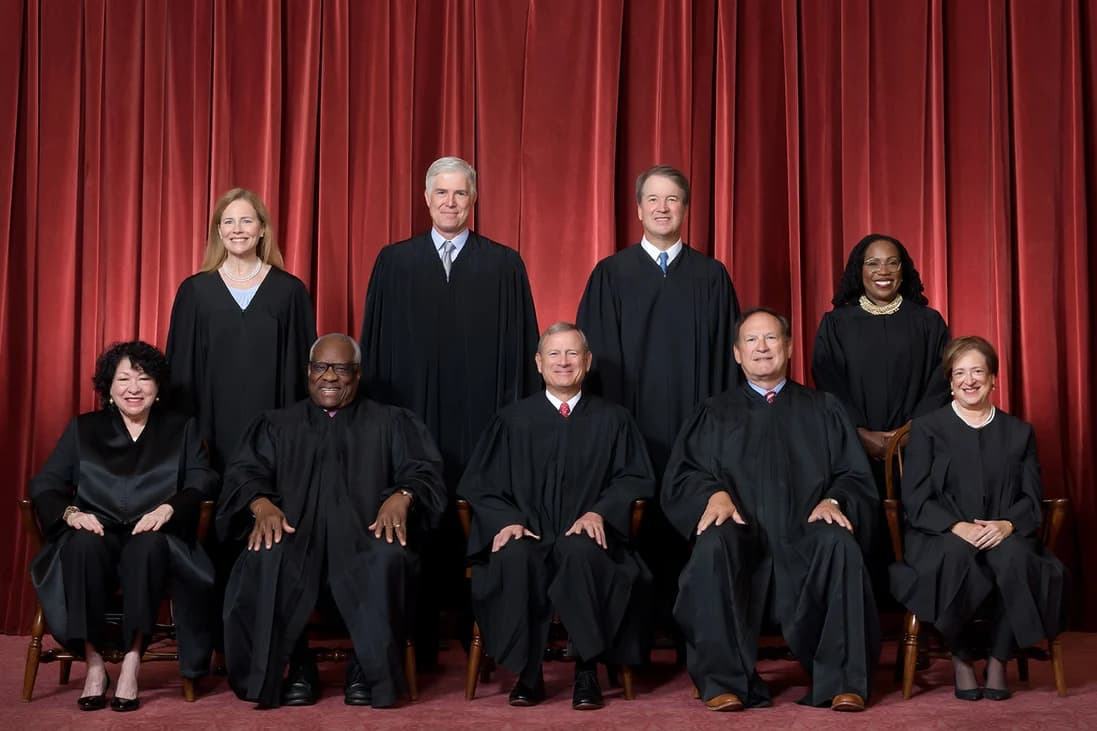
WASHINGTON (CN) — The justices' lucrative publishing deals left the Supreme Court unable to settle a major music copyright dispute Monday.
Four of the high court's nine members sat out on an appeal from the international record label BMG Rights Management. The label is owned by the same German media company as Penguin Random House, which published books by Justices Sonia Sotomayor, Neil Gorsuch, Amy Coney Barrett and Ketanji Brown Jackson.
According to watchdog group Fix the Court, the justices have collectively netted over $13 million from book deals. Unlike unreported gifts from billionaire donors, the high court's financial entanglements with the publishing industry have so far been outside of ethics scrutiny.
"Today's recusals make clear that the Supreme Court's current disqualification standards need review," Gabe Roth, Fix the Court's executive director, said in a statement.
The recusals resulted in an unusual predicament, leaving the Supreme Court without the necessary six justices to create a quorum. While Roth supported the justices' decision to recuse, he said the practice was unsustainable.
Roth said moving forward either cases involving Penguin Random House and companies connected to it would be immune from Supreme Court review or the justices would be forced to carve out a duty-to-sit exception. But he suggested that the justices could also place their book earnings in accounts they cannot access until they retire from the court.
"While not a perfect solution, I believe this is better than the status quo, where the lack of a quorum means a lower court's judgment is affirmed, and the Supreme Court is no longer supreme," Roth said.
A majority of the remaining five qualified justices determined the court wouldn't be able to hear the record label's appeal. Under federal rules, such cases result in an order affirming the lower court judgment with the same effect as if affirmed by an equally divided Supreme Court.
The skeleton bench followed that path in BMG's case, affirming a lower court ruling giving Cyril Vetter sole ownership of the 1962 song "Double Shot (Of My Baby's Love)" that he wrote with Donald Smith.
In 2022, ABC sought a license to use the song on international broadcasts and streaming services, kicking off an ownership dispute between Vetter and his record label. Two lower courts ruled in favor of Vetter, allowing him to reclaim copyright rights to the song in the U.S. and internationally.
BMG claimed the ruling upended bedrock industry practice governing publishing rights and threatened to sow chaos and confusion.