Jobs market stabilizes, with gains slowing after hot March and cold February
Gains were concentrated in a few industries like healthcare, but the labor pool seems to be healing after a disastrous February.
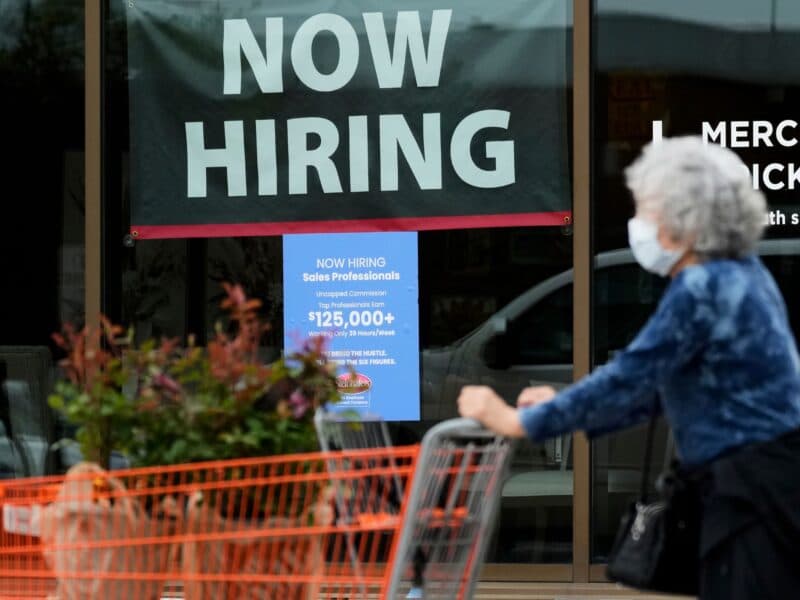
MANHATTAN (CN) — The U.S. economy added 115,000 jobs in April, more than double the amount most experts forecast.
The headline print is a notable drop from the 178,000 jobs added in March but much more than the 55,000-job median forecast. The unemployment rate also held steady at 4.3%, in line with expectations, according to the Bureau of Labor Statistics.
The jobs report for March was actually revised upward by 7,000 positions, but a downward revision to February's data painted an even worse picture. Instead of slashing 133,000 jobs, updated numbers showed 156,000 jobs were actually cut.
"The economy is so much better than what the doom crew has been saying," said Chris Zaccarelli, chief investment officer at Northlight Asset Management. "There are a lot of headwinds. Higher oil prices, sticky inflation and higher-for-longer interest rates, and yet the labor market is adding jobs, GDP is growing, and corporate profits are expanding at a rapid pace."
Gains were centered, once again, mainly in healthcare and transportation and warehousing sectors, which netted 37,000 jobs and 30,000 jobs, respectively. Manufacturing, construction, financial activities, leisure and hospitality, and professional services sectors saw virtually no change in employment.
In the private sector, payroll company ADP showed 109,000 jobs were gained in April, just under the 120,000-job forecast. The increase was nearly double the jobs gained in March, though, and the fastest job growth since January 2025.
However, like in the federal employment report, ADP's data showed nearly all the gains came in service-related industries, with education and healthcare leading the pack with 61,000 of the total job gains. The breakdown among employer also was skewed mostly to smaller companies, while those with 50 to 499 workers hired only 2,000 employees.
"Small and large employers are hiring, but we're seeing softness in the middle," Nela Richardson, ADP's chief economist, said in a statement. "Large companies have resources to deploy and small ones are the most nimble, both important advantages in a complex labor environment."
Wage growth also has not moved much, with those leaving their jobs seeing a 6.6% annualized increase in pay and those staying at their jobs seeing a 4.4% annualized increase — the latter of which is the smallest since the Covid pandemic.
The federal jobs report shows wages have picked up slightly, with average hourly earnings gaining $0.6 for April and 3.6% year-over-year.
A jobs report from Revelio Public Labor Statistics showed a 66,000-job gain in the labor market last month, concentrated mostly in the healthcare, financial and construction industries. Leisure and hospitality lost 27,000 jobs, while retail trade shed 18,000 jobs, Revelio said, pointing to a lopsided labor pool.
"With job postings down 5% year-over-year and posted salaries falling for the second consecutive month, the underlying demand signals suggest this uneven softening has further to run," Revelio Chief Economist Lisa Simon said in a statement.
An employment report from the National Federation of Independent Business released this week also showed the labor market softening, with the advocacy group's employment index falling for the second consecutive month.
Federal data on job openings didn't move much in March, but unfilled jobs are at the highest point they have been since June 2025, with more than one-third of respondents saying they had job openings they could not fill, NFIB said.
"Even in a month with a weaker employment index, over half of small businesses reported hiring or trying to hire," NFIB Chief Economist Bill Dunkelberg said in a statement. "A lack of qualified applicants has been a major hurdle for Main Street, and employers are struggling to fill open positions."