Ireland's turf-cutting tradition singled out as flouting nature law
A legal adviser for Europe's top court found Ireland failed to protect some of its most valuable peat bogs, moving the country closer to a reckoning over conservation and heritage.
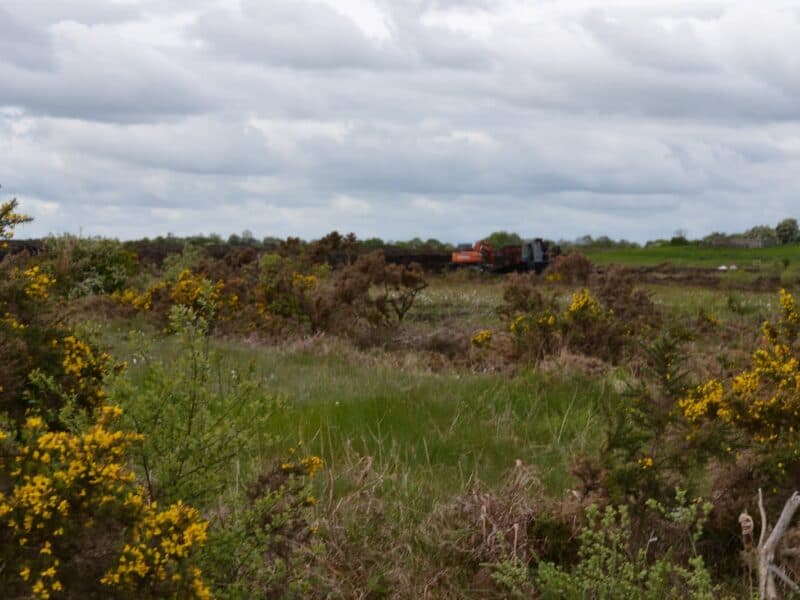
Ireland's ancient bogs, prized for generations as a source of home fuel, moved a step closer to a legal reckoning Thursday after an adviser to Europe's top court said Ireland failed to properly protect some of its most fragile wetlands.
Advocate General Juliane Kokott advised the European Court of Justice to largely back the European Commission's case accusing Ireland of allowing peat cutting to damage protected raised bog and blanket bog habitats, failing to restore degraded sites and leaving gaps in the rules governing peat extraction.
The Commission wants the court to declare that Ireland breached the EU's Habitats Directive. Ireland asks the court to dismiss the case.
Kokott said Ireland has made progress reducing peat cutting, but not enough. "However, it is not sufficient to comply fully with the prohibition of deterioration," she wrote.
Ireland's protected bogs form part of Natura 2000, the EU's network of protected nature sites. Raised bogs are rain-fed wetlands that build layers of peat over thousands of years, while blanket bogs cover broad, rain-soaked landscapes, particularly in western and northern Ireland. For generations, many Irish families cut peat, or turf, from those bogs to heat their homes. But draining bogs to extract it dries out the land, damages the ecosystem and releases stored carbon into the atmosphere.
The damage has been building for decades. Ireland's 2010 report to the Convention on Biological Diversity estimated that about 99% of the country's original actively growing raised bog had already disappeared. A 2012 aerial survey by Friends of the Irish Environment found fresh turf cutting across many protected bogs despite years of efforts to stop it.
Ireland says it has since relied on compensation schemes, consent requirements, monitoring, enforcement and restoration projects to curb peat cutting. By the end of 2022, it said cutting had stopped entirely at 73% of protected raised bog sites and had fallen sharply since 2003.
Nevertheless, Kokott said, Ireland still accepts that peat cutting and the drainage needed to extract peat can damage protected bogs. She said EU nature rules require governments to prevent protected habitats from deteriorating and "requires Ireland to take appropriate steps to prevent peat cutting in Natura 2000 sites designated for the protection of raised and blanket bogs."
Kokott acknowledged that progress but said illegal cutting continued and Ireland had not shown stronger enforcement was impossible. She pointed to closer monitoring, tougher penalties and blocking drainage ditches as practical ways to better protect the sites and make further peat cutting more difficult.
She also concluded that Ireland must restore protected bog habitats damaged by peat cutting since June 10, 1995, when the country should have proposed those sites for EU protection, except where the Commission failed to prove damage or restoration had already been accepted.
Hendrik Schoukens, professor of environmental law at Ghent University, said the opinion reaches beyond biodiversity. Peat cutting and the continued drainage of peatlands release greenhouse gases, creating what he called a "hidden climate link."
"This infringement proceedings is as much of a climate case as it is a conservation case," Schoukens said. He also described the Commission's push to require restoration dating back to the mid-1990s as an unusually ambitious part of the case.
Matilde Meertens, a PhD researcher and teaching assistant in environmental law at Ghent University, said the opinion reinforces a point that often goes unnoticed: Restoring damaged habitats has always been part of EU nature law, not something created by the bloc's newer restoration legislation.
"Under these circumstances, it becomes even more important to remind the member states that they are already obliged under existing EU legislation to restore certain habitats," Meertens said.
Cutting turf is also deeply rooted in Irish rural life. For many families, it is tied to turbary rights, a traditional right to cut peat from a bog for household fuel. The commission says Ireland offered compensation and relocation schemes, but argues they did not stop the damage.
Tristram Whyte, conservation, policy and fundraising officer at the Irish Peatland Conservation Council, said the government focused on compensation but never fully won over local communities.
"Real conservation will not be successful if there is not full engagement with communities on the ground," Whyte said. He added that many turf-cutting contractors had no alternative source of income, deepening divisions between rural communities and conservation authorities.
Kokott also found that Ireland's rules still exempt continued peat cutting for domestic use from existing peat banks in certain protected blanket bogs, leaving another gap in the country's protections. Ireland acknowledged that criticism and said it intends to remove the exemption.
A European Commission spokesperson said Brussels would wait for the court's final judgment before commenting further. The spokesperson noted the commission sent Ireland to the EU's top court in March 2024 over its failure to protect peat bogs.
Irish officials said they are studying Kokott's opinion and acknowledged its significance. They said Ireland has made substantial progress in recent years, including paying more than 75 million euros to compensate turf cutters, restoring more than 8,000 hectares (almost 20,000 acres) of protected peatlands and expanding conservation efforts. While awaiting the court's final judgment, they said Ireland would continue working with the European Commission and other stakeholders to protect and restore the country's peatlands.
The court is not bound by Kokott's opinion, but judges often follow their advocates general. A final ruling is expected in the coming months. If the judges agree, Ireland's centuries-old turf-cutting tradition could end up carrying a modern legal price tag, with continued noncompliance potentially exposing the country to financial penalties.
Courthouse News reporter Eunseo Hong is based in the Netherlands.