FBI director sues The Atlantic over story on drinking, firing 'freak-out'
Kash Patel is demanding $250 million in damages and asserts he can show the outlet acted with actual malice, a standard he recently claimed was a "legal layup."
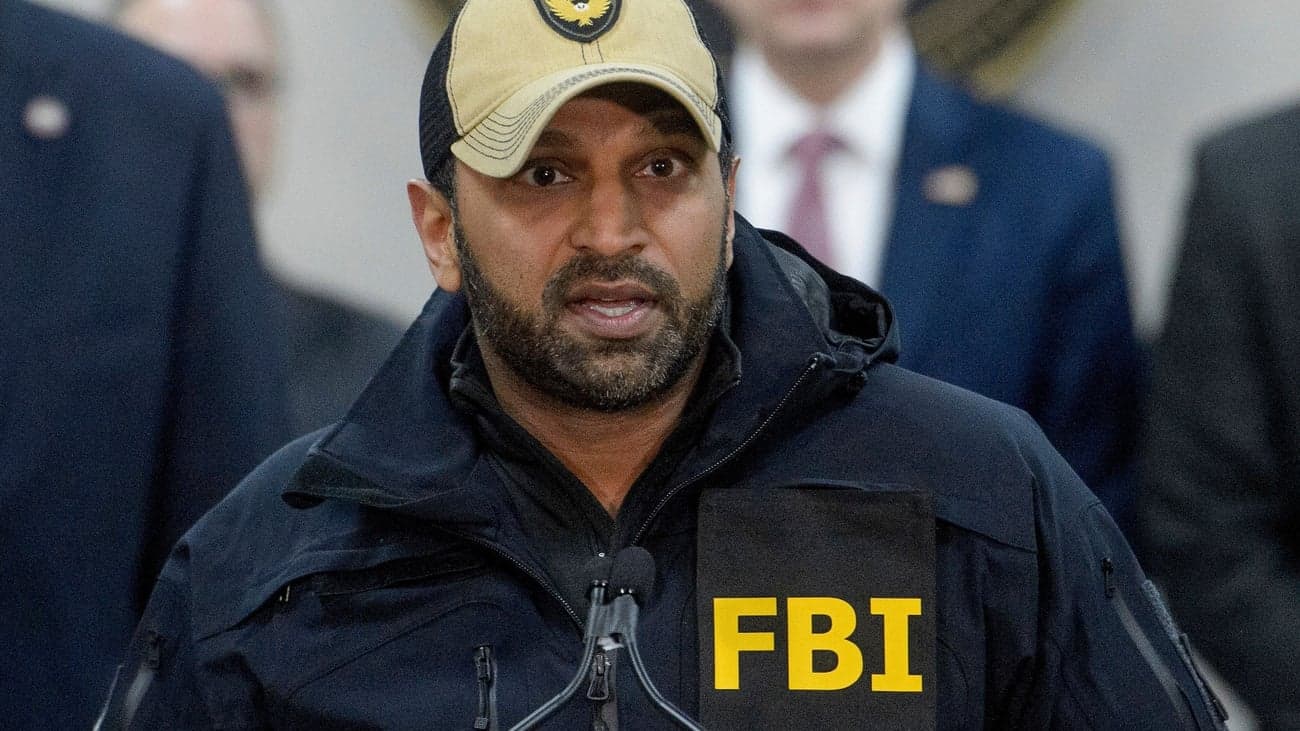
WASHINGTON (CN) — FBI Director Kash Patel sued the The Atlantic magazine Monday claiming he was defamed by an article asserting the agency head has engaged in several bouts of excessive drinking and is in danger of losing his position.
Patel sued in the U.S. District Court for the District of Columbia and is demanding $250 million in damages from the magazine and staff writer Sarah Fitzpatrick, insisting the story went beyond the journalist's right to criticize FBI leadership.
"Defendants are of course free to criticize the leadership of the FBI, but they crossed the legal line by publishing an article replete with false and obviously fabricated allegations designed to destroy Director Patel's reputation and drive him from office," Patel said in the 19-page complaint.
Patel argues Fitzpatrick relied solely on anonymous sources within the agency who are "both highly partisan with an ax to grind" and not in a position to know the facts.
"Defendants published the article with actual malice, despite being expressly warned, hours before publication, that the central allegations were categorically false; despite obvious and fatal defects in their own sourcing; despite The Atlantic's well-documented, long-running editorial animus toward Director Patel; despite a request for additional time to respond that Defendants refused to honor; and despite deliberately structuring the prepublication process to avoid receiving information that would refute their narrative," Patel said.
In Fitzpatrick's Friday article, titled "The FBI Director is MIA," she described an April 10 incident where Patel was locked out of an internal computer system at the FBI, became convinced President Donald Trump had terminated him and began calling aides and allies during a "freak-out," according to nine people familiar with the calls.
Patel denied the claims and said the incident was simply a routine technical problem while logging into a government system and was quickly fixed. The FBI had also informed Fitzpatrick before publication that the firing rumor was made up and the "freak-out" was fabricated.
Patel further tried to rebut the article's details that he is "often away or unreachable," stating he is present at FBI headquarters in downtown Washington nearly every day and is otherwise visiting FBI field offices when not.
Fitzpatrick has defended the story, responding to Patel's initial threats to sue that she stands "by every word of this reporting" and that The Atlantic has "excellent attorneys."
"People close to the director have said that he himself has expressed that he believes that he is about to be fired or that is imminent," Fitzpatrick said Friday on CNN. "This is widely, widely discussed, I think, within Washington, behind closed doors. In fact, there are senior administration officials who are openly discussing who will be the next FBI director."
As with any defamation case against a journalist, Patel must prove that Fitzpatrick and The Atlantic editorial staff acted with "actual malice," a high legal standard that requires a litigant to show a statement was made despite knowledge it was false or with "reckless disregard of whether it was false or not."
The Supreme Court set the actual malice standard in its landmark New York Times v. Sullivan— a case Justice Clarence Thomas, a George H.S. Bush appointee, has repeatedly indicated should be reconsidered — and subsequently added a "clear and convincing evidence" burden of proof for public officials.
Patel argues The Atlantic's investigation was "grossly deficient" and ignored obvious investigative leads or publicly available counter evidence, even when such evidence was provided by the FBI.
According to Patel, Fitzpatrick issued a request for comment Friday at 2:09 p.m. EST with 19 substantive claims and a 4 p.m. deadline.
The 111-minute deadline was meant to manufacture a "no comment" or summary denial, Patel said.
FBI Office of Public Affairs Assistant Director Benjamin Williamson initially replied to the request at 2:16 p.m., calling the claims absurd and that it was "completely false at a nearly 100% clip." The comment was not included in the article.
Also before publication, Patel's attorneys sent a detailed letter providing counter evidence and demanding the article be delayed for further comment.
In a post on X Friday evening, Patel claimed the actual malice standard is "now what some would call a legal layup."
Patel is represented by Jason C. Greaves of Virginia-based Binnall Law Group.
Monday's defamation lawsuit is the latest filed by the Trump administration against large media outlets.
In July 2025, Trump himself sued the Wall Street Journal over an article detailing a bawdy letter Trump supposedly sent to Jeffrey Epstein for his 50th birthday, which depicted an image of a naked woman with the president's signature below her waist "mimicking pubic hair."
On April 13, U.S. District Judge Darrin P. Gayles dismissed the $10 billion lawsuit after determining the president had failed to show the publication "acted with actual malice."
Gayles, a Barack Obama appointee, left the door open for Trump to amend his complaint and continue the lawsuit.