Ex-Philippine police chief wanted by ICC over Duterte drug war deaths
The International Criminal Court unsealed an arrest warrant for Ronald "Bato" dela Rosa, accusing former President Rodrigo Duterte's enforcer of driving an antidrug campaign that left thousands dead.
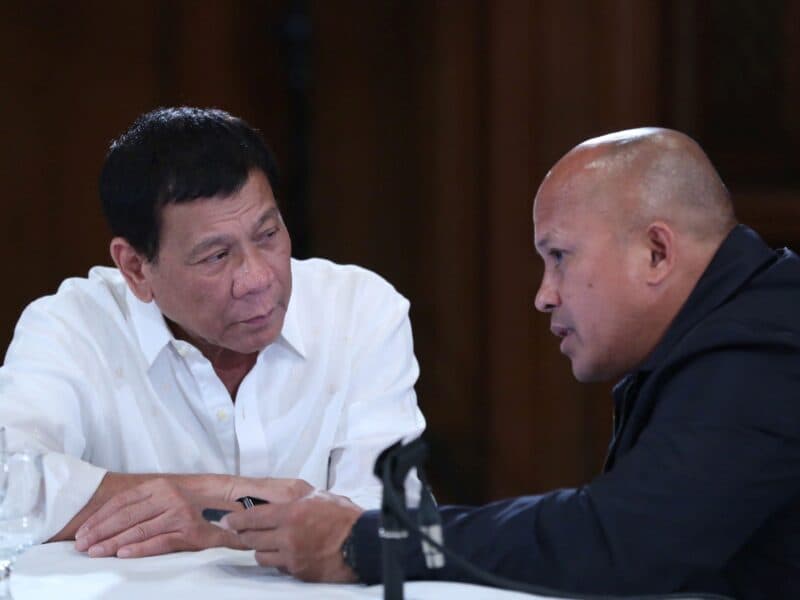
THE HAGUE, Netherlands (CN) — Former Philippine President Rodrigo Duterte's bloody war on drugs crept further into his inner circle Monday after the International Criminal Court unsealed an arrest warrant for former Philippine police chief Ronald "Bato" dela Rosa over killings tied to the campaign.
The warrant, filed secretly in November 2025 before being made public Monday, accuses dela Rosa of crimes against humanity — specifically murder — over killings prosecutors say took place between 2011 and 2019.
Now a senator and one of Duterte's closest political allies, dela Rosa spent decades rising through Philippine law enforcement before becoming one of the most recognizable faces of the drug war. His nickname, "Bato," meaning "rock," became tightly linked to the administration's hardline image.
According to the chamber, dela Rosa worked alongside Duterte and other senior officials as an "indirect co-perpetrator," with judges concluding at this stage that he helped organize and sustain the broader operation behind the killings. Judges wrote that there are "reasonable grounds to believe that Mr. Dela Rosa has committed the crime against humanity of murder."
The court described police officers and hired gunmen in Davao City working together as part of a so-called Davao Death Squad while Duterte served as mayor, before the violence later expanded nationwide after he became president in 2016.
Prosecutors also presented evidence of a coordinated campaign to "neutralize" suspected criminals across the country, especially people tied to drug offenses, and judges found enough material at this stage to conclude the term was internally used as a euphemism for killing targets.
They linked dela Rosa to conduct including publicly promoting killings, moving personnel connected to Davao operations into other regions and encouraging police to disguise killings as self-defense incidents.
The chamber further found reasonable grounds to believe the killings formed part of a "widespread and systematic attack" against civilians, one of the legal requirements for crimes against humanity.
Rather than trying to untangle every death linked to Duterte's drug war, judges focused on a smaller set of incidents prosecutors said reflected the broader pattern. The chamber reviewed 14 incidents and found reasonable grounds to believe police officers, sometimes working with hitmen and informants, killed at least 32 people between July 2016 and April 2018. The judges said the killings followed similar methods across different parts of the Philippines, with the same targets and tactics appearing repeatedly.
Created in 2002, the ICC acts as a kind of last-stop court for genocide, war crimes and crimes against humanity when countries cannot or will not seriously prosecute cases themselves. But the court cannot arrest suspects on its own and relies entirely on governments to hand them over. Major powers including the United States, China and Russia do not recognize the court's authority.
The Philippines withdrew from the ICC in 2019 under Duterte, a move widely seen at the time as an attempt to escape the court's scrutiny. Judges, however, have repeatedly said the country's withdrawal does not erase the court's authority over crimes committed while the Philippines was still part of the Rome Statute.
Duterte himself was arrested by the Philippine National Police and Interpol in March 2025 and flown to The Hague after years of clashes with the court. Last month, ICC judges confirmed crimes against humanity charges against him and cleared the case to move toward trial, bringing the once-untouchable former president closer to a full courtroom fight over the drug war that defined his presidency.
That case is already shifting into a new phase. Earlier Monday, another chamber approved the withdrawal of Duterte's lead lawyer, Nicholas Kaufman, after Duterte asked to replace him ahead of a May 27 status conference.
Dela Rosa, meanwhile, remains in the Philippines, and the ICC cannot arrest suspects on its own. Whether he is eventually taken into custody may depend on Manila's willingness to cooperate with the court, as it did in Duterte's case, though international travel could also become risky if he sets foot in a country prepared to enforce the warrant.
Judges said arrest was necessary because there was "no reasonable expectation that he would cooperate with a summons to appear issued by the court."
They also pointed to claims that dela Rosa threatened ICC investigators, called people cooperating with the court "traitors," and helped spread disinformation tied to the investigation.
Human Rights Watch welcomed the warrant Monday, calling it "another blow to the wall of impunity" surrounding killings tied to Duterte's antidrug campaign. Maria Elena Vignoli, the group's senior international justice counsel, urged Philippine authorities to arrest dela Rosa and surrender him to the ICC in The Hague "where he can be held to account."
The warrant is not a conviction, and dela Rosa is nowhere near a verdict yet. At this stage, ICC judges are only deciding whether prosecutors presented enough evidence to justify an arrest and push the case forward. If he is eventually brought to The Hague, prosecutors would still face the much harder task of proving the case in a full trial.
Courthouse News reporter Eunseo Hong is based in the Netherlands.