DOJ challenges Denver's assault rifle restrictions
Citing Bruen and Heller, the federal government argues Denver's 37-year-old ban on assault rifles is politically charged and unconstitutional.
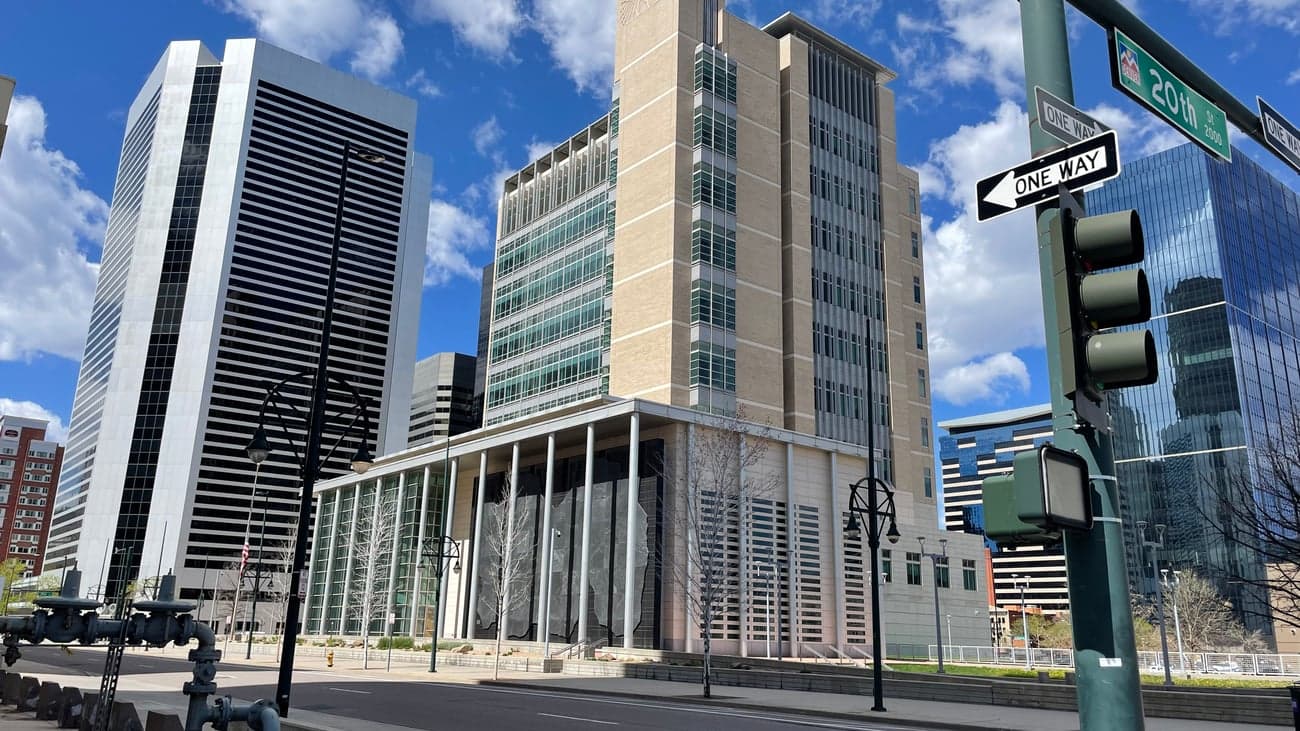
DENVER (CN) — Claiming violations of citizens' Second Amendment rights, the U.S. Department of Justice filed a federal lawsuit Tuesday, challenging Denver's 37-year-old assault rifle ban.
"Law-abiding Americans, regardless of what city or state they reside in, should not have to live under threat of criminal sanction just for exercising their Second Amendment right to possess arms which are owned by tens of millions of their fellow citizens," said Assistant U.S. Attorney General Harmeet K. Dhillon in a statement.
The Denver City Council passed its assault rifle ban in 1989 to combat crime. The federal government, however, argues the city's use of the term "assault rifle" is vague and politically charged.
The federal government points to two landmark U.S. Supreme Court cases: 2008's District of Columbia v. Heller — protecting law-abiding citizens' right to possess lawful weapons — and 2022's New York State Rifle & Pistol Association v. Bruen, which directs courts to compare modern gun restrictions with historical firearm regulation.
"There is no historical tradition of banning arms in common use," wrote U.S. attorneys in the 12-page complaint. "Therefore, the Second Amendment protects arms typically possessed by law-abiding citizens for lawful purposes that are in 'common use' today."
Gun control organization Brady: United Against Gun Violence estimates there are about 20 million AR-style firearms in the U.S. today, compared to just 100,000 in 2004.
"In reality, the firearms the city calls 'assault weapons' include ordinary semiautomatic rifles possessed by millions of law-abiding Americans," the government argued in the complaint. "Indeed, Americans own literally tens of millions of AR-15-style rifles, the paradigmatic 'assault weapon' covered by the ordinance."
In a statement, Denver Mayor Mike Johnston vowed to protect the city's ordinance.
"Our first job is to keep Denverites safe, and we will not be intimidated out of doing it," said Johnston, a Democrat, in a statement. "Denver's law has stood for 37 years because it works, it saves lives, and it reflects the values of our community. No demand or lawsuit from Washington is going to change that."
The DOJ has also pressured Colorado's state government to repeal its decade-old large-capacity magazine ban, which was passed in the wake of the 12 lives lost in the 2012 Aurora theater shooting and has been upheld by the state Supreme Court.
"Large-capacity magazine laws are responsible policies that decrease the deadly impacts of mass shootings and save lives," said Attorney General Phil Weiser over email. "The state has a duty to protect Colorado residents from gun violence, and I will vigorously defend our state large-magazine limit law from this attack by the Trump Justice Department."
Leading the federal government's legal team is Denver attorney Barry Arrington, who joined the DOJ's new Second Amendment bureau in March.
In recent years, Arrington pursued similar litigation against Colorado on behalf of Second Amendment advocacy groups Rocky Mountain Gun Owners and The National Gun Rights Association, challenging the state's ghost gun ban and age restrictions as they went into effect.
Arrington also represented the groups in challenging the Centennial State's decade-old ban on large capacity magazines in 2022, right after the ink dried on Bruen. The plaintiffs stipulated to the dismissal of the case in 2024.