Decrying 'false narrative,' Johnson punts debate over Trump ballroom funds to Senate
The House speaker joined Senate Republican leadership in insisting the $1 billion line item for the construction project at the East Wing of the White House would only be used for security enhancements.
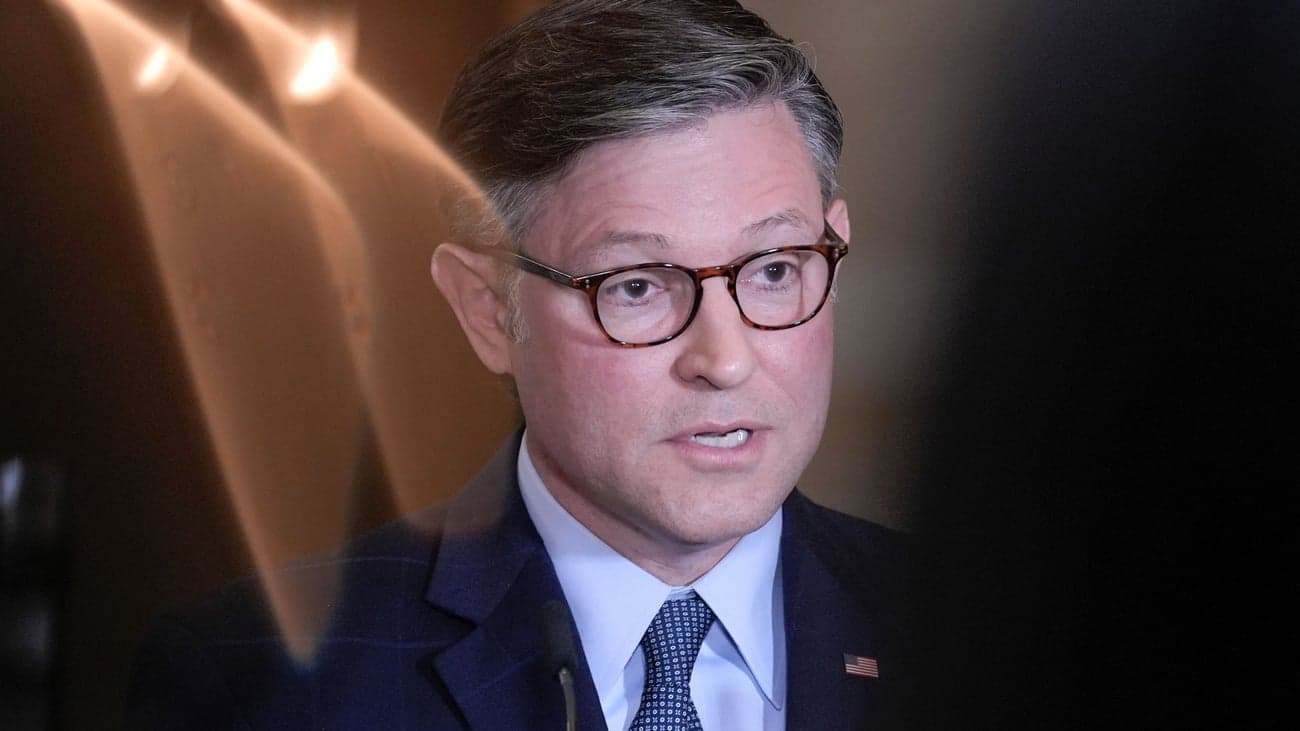
WASHINGTON (CN) — House Speaker Mike Johnson on Monday demurred to the Senate on whether lawmakers should explicitly stop the Trump administration from using $1 billion of funding in a Republican budget reconciliation bill to build the president's much-vaunted White House ballroom.
But the top House Republican slammed what he called a "false narrative" coalescing around the proposed appropriation for the East Wing construction project, pointing to language in the GOP budget legislation that he said limits its use to "increased security measures" at the executive residence.
Senate lawmakers are in the process of drafting a budget reconciliation bill aimed primarily at funding immigration enforcement agencies that were at the center of a monthslong political fight over the Homeland Security Department.
The language of the bill itself, however, is not limited to funds for DHS programs. In the Senate Judiciary Committee's portion of the budget reconciliation measure, unveiled last week, lawmakers added a roughly $1 billion line-item funding "security adjustment and upgrades" to the East Wing. The provision supports President Donald Trump's "modernization project" for the White House, which is planned to include a 90,000 square foot ballroom for official events.
Though Democrats have claimed the billion-dollar earmark represents a taxpayer-funded green light to the president's ballroom project, which he long claimed would be bankrolled on private donations, Republicans point to language in their bill they say ensures the administration can't use the cash for the proposed event space.
And speaking to reporters during a news conference Wednesday morning, Johnson reiterated that argument, saying it was a "gross misstatement" to claim the budget reconciliation bill funded the ballroom.
"The Secret Service put in an urgent request for additional security measures," said the House speaker. "It's not for the ballroom; it's for security measures."
In a letter sent to congressional Republican leaders last week, Secret Service Director Sean Curran and DHS Secretary Markwayne Mullin said the $1 billion would be used for "above and below ground requirements" in the East Wing construction project. In addition to the proposed ballroom, the new White House facilities would also include a drone-proof bunker built below ground.
"Importantly, as the legislative text makes explicit, none of these funds will be used to support non-security improvements at the White House," the administration officials told lawmakers.
The budget reconciliation measure does bar the Secret Service from using any of the new spending on "non-security elements of the East Wing Modernization Project." But, as Senate Judiciary Committee chairman Chuck Grassley has pointed out, the word "ballroom" does not appear in the legislative text — and the measure does not address the Trump administration's longstanding argument that the ballroom itself is a security apparatus.
The Justice Department has argued in federal court that the bunker planned for beneath the East Wing can't serve its function without "an appropriate structure to shield and protect it." The administration has claimed that because the proposed ballroom will feature blast-proof windows and a missile-resistant construction it should be considered integrated with the bunker — and that the whole project advances "critical national security objectives."
Asked by Courthouse News how Congress should square the Trump administration's security claims with the language of the reconciliation bill, and whether lawmakers should explicitly block the president from using the $1 billion in funds for ballroom construction, Johnson on Wednesday punted to the Senate.
"I don't have a pen in the Senate," he said. "They're writing the bill. We'll see what we get.'
Johnson added that Trump had been "abundantly clear" he plans to build the proposed East Wing ballroom with private funding rather than taxpayer dollars, but that the Secret Service needs to "think differently about security" as construction crews work on the White House.
"We live in a very dangerous time, and there are new and increasing threats that we have never faced before, so Congress has a role in funding that," said Johnson. "We'll have to see how it all works out."
Calls for an event space at the White House grew following a shooting last month at the White House Correspondents' Association's annual gala at the Washington Hilton in D.C. The incident saw a would-be assassin apprehended by law enforcement steps from the event, where Trump and several administration officials and congressional leaders were in attendance.
Johnson argued the failed assassination attempt — the third targeting Trump in as many years — demonstrated an "urgent need" for increased security measures at official events.
But the House speaker did leave room for change in the proposed Republican reconciliation bill, pointing out the measure needed to pass a stringent budget review under the Senate's longstanding Byrd Rule.
"We don't know what the final bill is going to be that we get," Johnson told reporters. "They've got to go through three more steps … so we're not going to prejudge that product."
Under the Senate Byrd rule, the chamber's parliamentarian can overrule provisions of a budget reconciliation bill that do not pertain to spending matters. Senate Democrats this week signaled they would mount a challenge to the proposed ballroom security funding using that mechanism.
In addition to the Byrd rule review — often referred to as the "Byrd bath" — the reconciliation measure must also survive markups in the Senate's homeland security and judiciary committees as well as a final floor vote. But the bill can pass on a simple majority, meaning Democrats have little to no say in halting it from final passage.
The Senate Homeland Security Committee is expected to mark up its portion of the budget reconciliation bill this week. The Senate Judiciary Committee, whose section of the measure includes the controversial ballroom security funding, is set to hold its own markup next week.