DC Circuit sides with religious groups in fight to block ICE church raids
In a split decision, the appellate panel determined 27 Judeo-Christian groups had shown they would be harmed by ICE's loosening of rules meant to only allow raids in the narrowest circumstances.
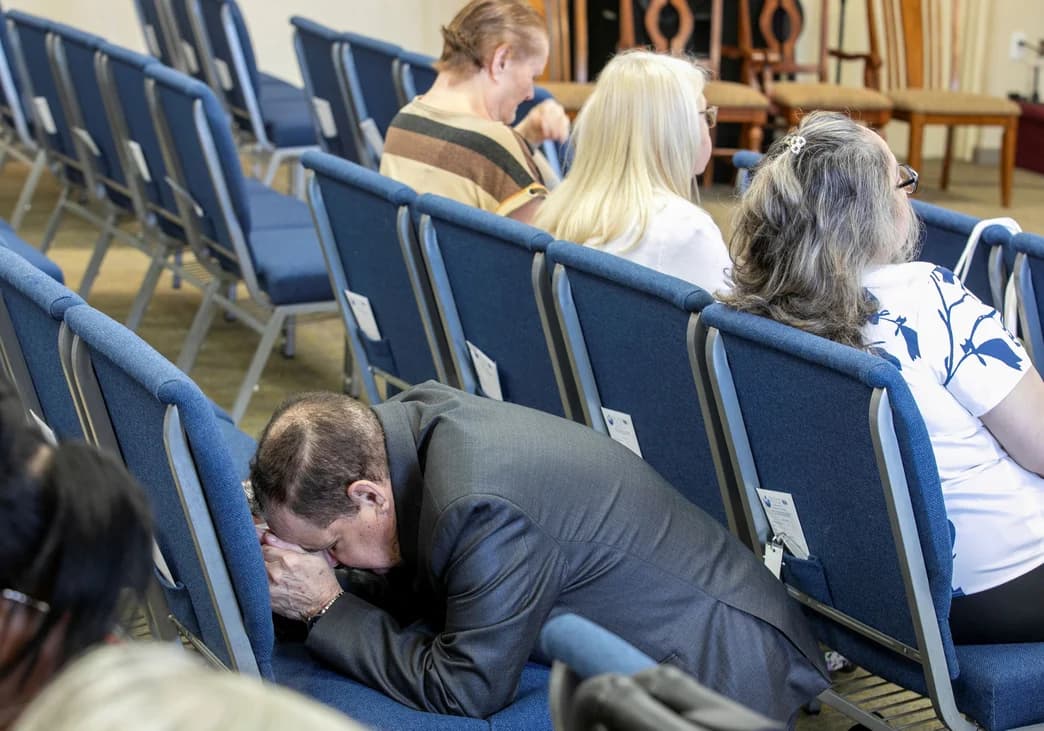
WASHINGTON (CN) — A split D.C. Circuit panel sided on Tuesday with a multifaith coalition in a challenge against a Trump administration policy reversal that allows U.S. Immigration and Customs Enforcement agents to freely enter places of worship to arrest migrants.
In a 2-1 decision, the panel overturned a federal judge's ruling that the coalition lacked standing for a preliminary injunction because the 27 Christian and Jewish groups failed to show a "credible threat of imminent enforcement" specifically targeting their houses of worship.
U.S. Circuit Judge Florence Pan, joined by U.S. Circuit Judge Robert Wilkins, sided with the coalition and found it likely faces imminent harm from increased enforcement, the harm is directly linked to the new enforcement policy, and a preliminary injunction would redress that injury, at least in part.
The Joe Biden appointee and Barack Obama appointee, respectively, remanded the case to U.S. District Judge Dabney Friedrich to reconsider the coalition's request for an injunction.
The majority found the coalition clearly showed, under the new policy, its congregants face a credible threat of enforcement.
"Plaintiffs have direct evidence that the government intends to increase immigration enforcement at sensitive locations — that is the whole point of the Rescission Memo," Pan wrote. "The government has done the opposite of 'disavowing any intention of' taking enforcement action at or near plaintiffs' members' houses of worship. Instead, it announced a plan to ramp up enforcement, and that initiative has already begun: Plaintiffs point to several specific examples of the government engaging in enforcement activity at or near their members' houses of worship."
In 1993, the government adopted the "Sensitive Locations Policy," directing immigration officials to avoid apprehending individuals and conduct investigations near schools, places of worship, funerals and other religious ceremonies. The policy remained largely unchanged for over 30 years.
In 2021, then-Secretary of Homeland Security Alejandro Mayorkas revised the policy to require agents to seek prior approval from their headquarters before taking any enforcement action at such sensitive locations.
Only under certain "exigent circumstances," such as incidents involving national security threats, imminent risk of death or physical harm, the destruction of criminal evidence, during hot pursuit of an individual who poses a public safety threat, as well as when a safe alternative does not exist, could agents act without prior approval.
On Jan. 20, 2025, Acting DHS Secretary Benjamine Huffman rescinded the sensitive locations policy and wrote in a memo that any "bright-line rules" about where rules could be enforced were unnecessary. The department directed ICE and CBP officers to "use discretion along with a healthy dose of common sense."
Pan noted freezing the Trump administration's change would not fully restore the status quo before Jan. 19, 2025, but it would address many of the harms the coalition identified.
"The Mayorkas memo required agents to avoid sensitive-locations enforcement 'to the fullest extent possible,'" Pan wrote. "It also narrowly defined the exception for 'exigent circumstances,' and it included additional guidelines to mitigate the adverse consequences of covered actions. Thus, even if a reversion to the Mayorkas memo would not restore the status quo ante, it likely would alleviate 'at least some of' plaintiffs' asserted injury by discouraging at least some immigration-enforcement activities at or near their members' houses of worship."
In their initial lawsuit, the coalition highlighted the Jan. 31, 2025 arrest of a Honduran immigrant named Wilson Velásquez during a church service in Georgia.
He traveled to the U.S. with his wife and three children in 2022; they turned themselves in to request asylum immediately after crossing the border. They were given a court date and released after immigration officers attached an ankle monitor to Velásquez.
The family settled near Atlanta and attended services at a Pentecostal church several times a week, helping with music. When the agents arrived, Velásquez had attended all his required check-ins at an Atlanta ICE office and had a court date to present his asylum case to a judge.
Despite that, the ICE agents arrested him, saying they were "looking for people with ankle bracelets."
U.S. Circuit Judge Neomi Rao, a Trump appointee, wrote in her dissent that the coalition's claims of harm were all speculation and would likely have little to no cognizable impact.
"In particular, the guidance they seek to restore has no effect on the executive branch's legal authority or enforcement discretion," Rao wrote. "Plaintiffs ultimately offer only speculation that restoring policy guidance from a previous administration will change the enforcement practices of this one. Because redressability requires more than conjecture, the District Court correctly denied a preliminary injunction."