Biden sues feds to block release of special counsel probe records
The Justice Department initially rebuffed requests by the Heritage Foundation for the records, citing the lack of criminal charges by special counsel Robert Hur, before reversing course in February.
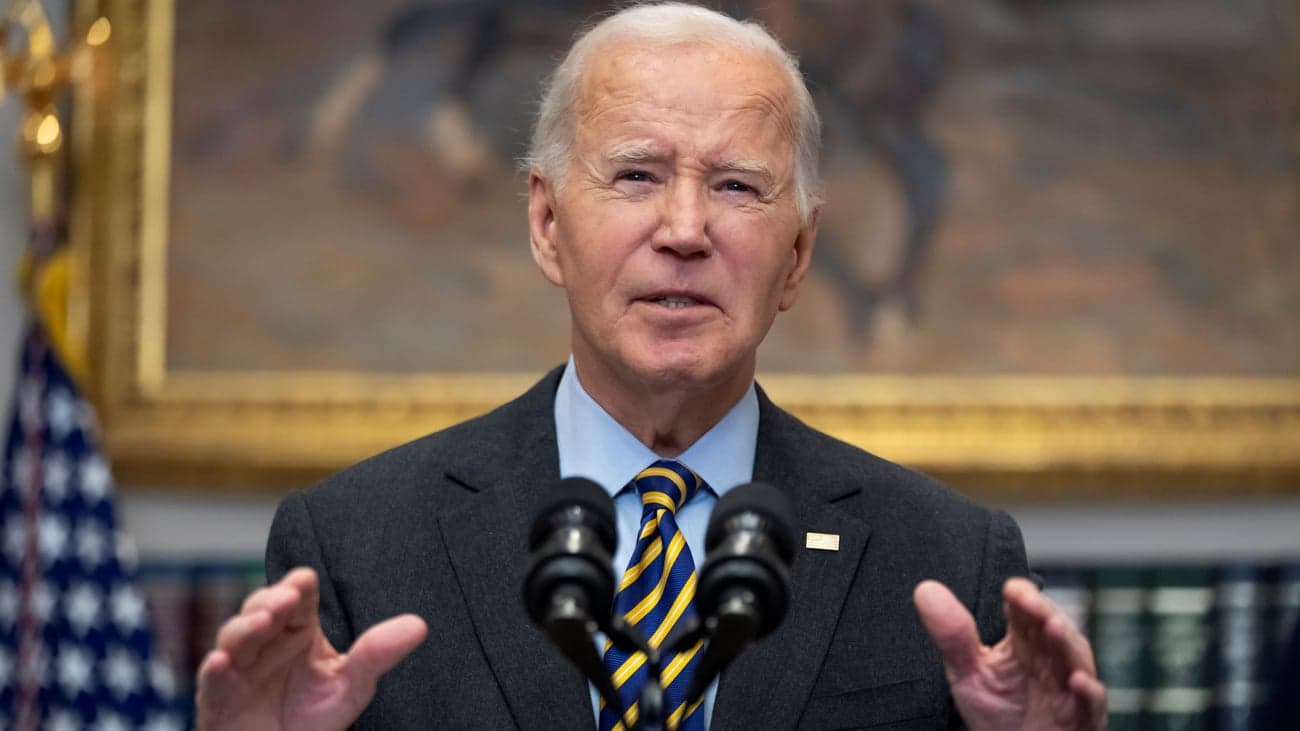
WASHINGTON (CN) — Former President Joe Biden sued the Justice Department late Tuesday night in an effort to block the planned release of audio and transcripts of private interviews with a ghostwriter that were used in a special counsel investigation regarding his handling of classified documents.
Biden sued in the U.S. District Court for the District of Columbia, claiming the Justice Department plans to release the recordings on June 15, despite having agreed to withhold them from Freedom of Information Act requests due to their private nature.
"Every American, including a sitting or former vice president, has a right to privacy in the personal conversations he has within his own home," Biden says in the complaint. "And when the U.S. Department of Justice obtains that private information through a criminal investigation, the department bears a particular responsibility to protect it from disclosure.
"This lawsuit seeks to halt the department's plan to abandon its defense of these core tenets of American justice by disclosing President Biden's private information — information the department has long maintained is exempt from disclosure under the Freedom of Information Act — in response to a purported request from the House Judiciary Committee," Biden continues. "That request is pretextual, lacks a legitimate legislative purpose, is outside the scope of the committee's investigative powers and is invalid and unenforceable."
Biden wants U.S. District Judge Dabney Friedrich, a Donald Trump appointee, to declare the request by the committee pretextual and unenforceable, set aside the Justice Department's decision to disclose the records and issue an injunction barring their release.
The former president says the conversations relate to his 2017 memoir "Promise Me Dad: A Year of Hope, Hardship and Purpose," in which he recounts the calendar year following Thanksgiving 2014, the year his elder son Beau died of brain cancer and the year he considered running for president in 2016.
The department acquired the materials in 2023 during former special counsel Robert Hur's investigation into Biden regarding his handling of classified records. Hur ultimately concluded criminal charges were unwarranted.
In 2024, the right-wing Heritage Foundation submitted a Freedom of Information Act request and ultimately filed a lawsuit seeking the audio recordings and transcripts from the Justice Department.
There, U.S. District Judge Ana Reyes seemed skeptical as to the records' importance at the time considering Biden had dropped out of the presidential race over concerns about his age.
"What undecided voters out there all really care about these tapes?" Reyes asked the foundation's attorney Samuel Dewey. "I would bet everything I own and my dog, Scout, that anyone's vote will actually be swayed by this transcript."
Dewey maintained there was a public interest to "check [Hur's] homework" and make their own judgment whether Biden should have been charged.
Over the next two years, the Justice Department denied the requests and argued it properly withheld the recordings under FOIA exemptions 5, 6 and 7, which cover privileged communications, information for which disclosure would invade another individual's privacy and disclosures that would constitute an unwarranted invasion of personal privacy.
In court filings, the department acknowledged the significant privacy interests at play and said releasing recordings would be comparable to releasing pages from an individual's diary or their private text messages despite the lack of criminal charges against them.
In February, the Justice Department reversed course and notified Biden it intended to release the recordings to the Heritage Foundation. In the aftermath, Biden's attorneys attempted to reach a deal to prevent their release, but the government instead obtained a request for the records from the Judiciary Committee.
In the lawsuit Biden notes that his attorneys were informed of the request on March 19, but the written document from the committee is dated March 23.
The Justice Department's reversal comes amid a recent uptick in efforts by the agency's leadership to seemingly deliver on several of President Trump's demands for retribution against his political enemies.
Following the ouster of former Attorney General Pam Bondi in April, now acting Attorney General Todd Blanch has overseen indictments against former FBI Director James Comey and the Southern Poverty Law Center.
Trump has also used the Justice Department to establish a $1.776 billion "Anti-Weaponization fund" — in part paid for by a settlement of his own lawsuit against the Internal Revenue Service — meant for his political allies who were investigated and charged by the Justice Department under Biden, including Jan. 6 defendants.
The Justice Department did not respond to a request for comment.