Amy Winehouse's dad loses court fight over auctioned belongings
A U.K. judge found many of the items that were sold, including bras and purses, were gifts to friends from the late singer-songwriter, who died at 27.
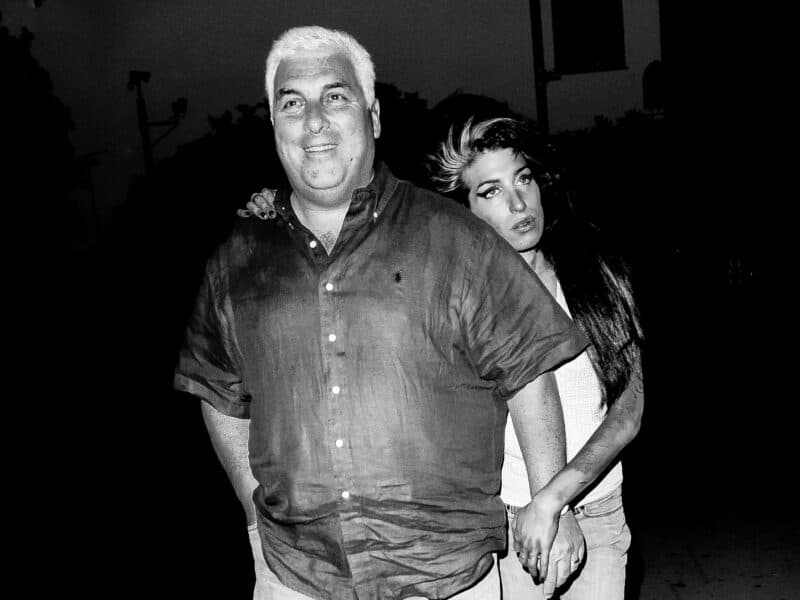
MANCHESTER, England (CN) — The father of singer Amy Winehouse lost a High Court battle Monday against two of her closest friends, after a judge rejected claims they wrongly profited from selling the late star's clothes and personal items.
Mitch Winehouse, who manages his daughter's estate, sued stylist Naomi Parry and friend Catriona Gourlay over auctions held in the United States in 2021 and 2023.
He had accused them of concealing the sales and selling items that belonged to the estate.
Deputy High Court Judge Sarah Clarke, King's Counsel, dismissed the claim in full, finding no deliberate concealment and ruling that Winehouse could have discovered the sales "with reasonable diligence."
The decision closes a dispute over more than 141 items linked to the Grammy-winning singer, best known for hits "Rehab" and "Back to Black," whose death in 2011 at age 27 shocked fans worldwide.
She remains one of Britain's most influential artists.
Items included everything from dresses, scarves and bras to earrings, makeup and bags, which were sold at Julien's Auctions in Los Angeles in November 2021 and May 2023.
Her death left her estate to her parents under U.K. intestacy law, the rules that govern inheritance when someone dies without a will.
At the heart of the case was whether the items belonged to the estate or had been given to friends before Winehouse's death.
The judge said the evidence showed the singer often gave away clothes to close friends, noting she had "more items than she could ever wear, use or store" and did not want to be seen wearing the same outfit twice in public.
The auctions raised about $1.4 million, with roughly one-third going to the Amy Winehouse Foundation, a charity set up after her death to support young people.
One dress worn during her final performance in Belgrade, Serbia, sold for more than $240,000.
Lawyers for Winehouse argued the defendants "deliberately concealed" the sales and said the lawsuit was his only way to get answers.
But the judge rejected that claim and criticized his handling of the case.
Clarke described Winehouse as an "unreliable witness" who brought the claim "without bothering to check" whether he had a valid basis until shortly before trial.
She also said he "likes to dominate people and situations."
At the same time, Clarke acknowledged his motivations were shaped by grief and a desire to protect his daughter's legacy.
The judge said: "Mr. Winehouse is clearly a strong character but also someone who has suffered a great tragedy in the loss of his daughter. Since Amy's death, he has worked hard to keep her memory alive, including through the charitable entity the Amy Winehouse Foundation, which supports and informs young people through a variety of projects."
She added how Amy's estate, particularly through royalties from "Back to Black," had made Mitch Winehouse extremely wealthy.
"Mr. Winehouse is therefore understandably sensitive about anyone who he perceives as exploiting Amy's memory particularly for financial gain, but also in my judgment, he is equally sensitive about ensuring that the family continue to benefit financially," she wrote.
The ruling also highlighted how some claims were dropped late in the case after Winehouse admitted some items were clearly gifts, raising questions about the strength of his overall claim.
Parry welcomed the decision, saying the court had "cleared my name, unequivocally and in full" after years of "deeply damaging and unfounded allegations brought by Mitch Winehouse."
She said the case had taken a toll on her health and career, adding: "This judgment restores the truth. It does not, however, erase the toll."
During the trial, Parry also testified that Winehouse had offered her $250,000 dollars to settle the dispute, an offer she rejected, telling the court she would "rather set the money on fire than give him a penny."
Winehouse denied claims brought by lawyers for Parry that he was driven by "petty jealousy," maintaining he believed proceeds from the earlier auction would be shared with the family and the foundation.
The case sheds light on the complexities of managing celebrity estates in the U.K., where personal and mundane belongings can become valuable assets, with high-stakes disputes over informal gifts or word-of-mouth agreements.
This case is similar to one involving legendary guitarist Jimi Hendrix, who also died at 27.
Hendrix died in 1970, leaving no will. His estate was left to his attorney, who provided Hendrix's father, Al, an income from the royalties.
Al successfully sued the administrator in 1994 for the right to manage the estate. When Al died in 2002, it was left to his adopted daughter Janie.
However, Jimi's brother Leon claimed he had the right to the inheritance and contested the decision. He lost the subsequent court battle in 2007.
This later led to the Hendrix estate taking action against Leon in 2017 for the illegal sale of merchandise, which was ultimately resolved in an out of court settlement.
Courthouse News reporter James Francis Whitehead is based in England.