A decade on, Amazon communities struggling with a massive dam still await a human rights ruling
The case has been pending before the Inter-American Commission on Human Rights since 2011, as Indigenous and riverside communities say the project continues to affect fishing, food and life along the Xingu River.
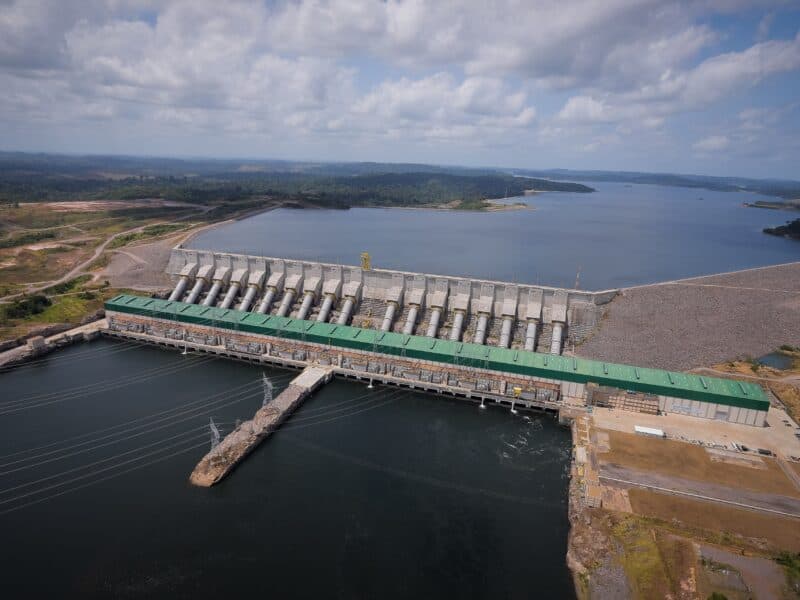
RIO DE JANEIRO (CN) — Before the Belo Monte hydroelectric complex officially opened in the Brazilian Amazon on May 5, 2016, the Paquiçamba village relied on fishing, small-scale farming and gathering along the Volta Grande do Xingu, a stretch of the river that runs through one of the areas most affected by the project.
Fish like white pacu, peacock bass, surubim catfish and redtail catfish were part of the community's diet and income. One night of fishing could feed a family of more than 10 people for two days.
Ten years after the plant began operating, Eliete Pakisamba, 46, one of the leaders of the village of about 80 residents, describes a different routine.
White pacu disappeared from daily fishing, other species' reproductive rates dropped and navigation became difficult or sometimes impossible. The community began depending on alternatives that could not replace its relationship with the river.
Some families tried growing cacao. Others began raising fish in net tanks. But life was never the same.
"We went from fishers to farmers, and not very profitable farmers, because we don't know how to work with this new activity," Eliete Pakisamba said. "Very few families were able to make it work. Many people had to leave the village for the city."
Eliete Pakisamba is among thousands of Indigenous people, traditional riverside communities, artisanal fishers and Altamira residents who have been waiting 15 years for a response from the Inter-American Commission on Human Rights over the harm attributed to Belo Monte.
The case, filed in 2011, is still awaiting an admissibility and merits decision, where the commission assesses whether Brazil bears international responsibility.
Erina Gomes, an attorney with the human rights and environment program at the Interamerican Association for Environmental Defense, known as AIDA, said the organization was among the groups that filed the petition.
She said the case sought to warn the commission about the risks that a project the size of Belo Monte could pose to the ecosystem of the Volta Grande do Xingu, Indigenous peoples, traditional riverside and fishing communities and the city of Altamira.
"In 2018, we told the commission that the most serious harms and risks we had warned about in the 2011 petition had not only been confirmed, but had grown worse," Gomes said.
Daniel Cerqueira, a lawyer at the Due Process of Law Foundation who previously worked at the Inter-American Commission, said delays in case processing are common in the system, but Belo Monte's timeline is longer than the commission's historical and current average.
Cerqueira said petitions filed in recent years typically take about seven or eight years to receive an admissibility or merits decision.
In the Belo Monte case, the commission has yet to issue an admissibility decision, although it said in 2017 it would analyze admissibility and merits together.
Cerqueira said the delay should be read in light of Brazil's political reaction to the precautionary measure granted by the commission in April 2011, when it asked the country to suspend the project until safeguards were in place, especially for isolated Indigenous peoples.
The Brazilian government rejected the measure, recalled its ambassador to the Organization of American States and pressured the Inter-American system. According to Cerqueira, that process led to changes in the rules governing precautionary measures and made the commission more restrictive in such cases.
"The Brazilian government had an economic interest at the time, and that affected not only the processing of the case but also how the commission has decided precautionary measures involving Indigenous peoples facing megaprojects," Cerqueira said.
He added the last time the commission granted a precautionary measure asking a state to suspend a megaproject was in the Belo Monte case.
Originally conceived in the 1970s, during Brazil's military dictatorship, Belo Monte only got off the ground decades later. It was designed as one of the largest hydroelectric plants in the world, with 11,233 megawatts of installed capacity, to expand the country's energy supply.
Norte Energia, the concessionaire created to build and operate the project, won the auction in 2010. Construction began the following year amid lawsuits, challenges to the environmental licensing process and accusations that Indigenous peoples and traditional communities had not been properly consulted.
Unlike a hydroelectric plant with a large reservoir, Belo Monte was built to divert part of the Xingu's flow through artificial canals to its turbines. The water then returns to the river farther downstream, leaving the Volta Grande do Xingu with reduced flow.
That division of the water — between power generation and the maintenance of ecosystems and communities along the river's original course — remains one of the main issues in the legal and environmental dispute.
In Paquiçamba, Eliete Pakisamba said the dispute is especially felt during the piracema, the period when fish swim upriver to reproduce. She said the community knows which months the Volta Grande needs more water so species can reproduce.
"Without repairing the piracema, there is no way to repair this with money," Eliete Pakisamba said. "No amount of money can provide food for the people here."
Eliete Pakisamba said that if the piracema period were respected, the plant could continue generating power while fish could reproduce again in the river. Without that, she said, the Volta Grande will continue degrading year after year.
Felício Pontes Jr., a regional federal prosecutor in the state of Pará who has followed Belo Monte since it was still in the planning stage, said the Federal Prosecutor's Office filed more than 20 lawsuits against the plant, involving different stages of licensing, prior consultation and the project's social and environmental impacts.
Pontes said some of those lawsuits have already ended, most with rulings favorable to prosecutors, but that this was not enough to guarantee protection or reparations for affected communities. He said part of the problem lies in delays in Brazil's judicial system and the use of a procedural tool known in Brazil as suspensão de segurança, or suspension of security.
Created during the military dictatorship, suspension of security allows court presidents to suspend judicial decisions if they find they may affect public order, health, security or the economy. In practice, the mechanism can halt the effects of decisions favorable to communities before they are enforced.
"I admit that after 40 years practicing law, I still do not know what public economy and public health mean, because everything fits in there," Pontes said.
Gomes said the litigation in Brazilian courts helps explain why the case reached the Inter-American system.
"Those dozens of lawsuits were not able to provide a timely response to the impacts these communities and the Volta Grande have suffered," Gomes said, adding that even first-instance decisions favorable to rights protection were blocked through suspension of security.
Gomes said a decision by the Inter-American Commission or the Inter-American Court would not undo Belo Monte or restore the river, but would have prospective value.
She said it could create a legal obligation for full reparations to affected communities and establish a regional precedent on energy projects presented as clean but built on systematic human rights violations.
Cerqueira said an international decision could still have effects, but that the delay reduces the capacity for reparations in cases like Belo Monte.
He said when a megaproject has already been built and operating for years, measures such as prior consultation, territorial restitution or full recovery of affected ways of life become much harder to fulfill.
In that scenario, he said, the commission or the court could seek alternative reparations, such as compensation proportional to the damage, measures for environmental and cultural rehabilitation and guarantees the damage won't be repeated.
The case could also push Brazil to review how it decides its energy policy and authorizes projects with major environmental and social impacts, Cerqueira said.
In a statement, Norte Energia said Belo Monte is one of the most important assets in Brazil's electricity system and has generated more than 255 million megawatt-hours since it began operating, enough energy to supply Brazil for five months. The company said the plant meets an average of 5% of national demand each year and reaches 16% during peak hours.
The concessionaire said it continues to carry out actions in the Middle Xingu region to fulfill commitments made in the licensing process.
According to the company, more than 8 billion reais ($1.6 billion) have been invested in more than 100 plans, programs and projects, including hospitals, primary health care units, schools, neighborhoods, urban infrastructure works, reforestation and actions aimed at Indigenous communities.
While the Belo Monte case awaits a decision from the Inter-American Commission, another major project is advancing in the same region.
Belo Sun Mining Corp., a Canadian company, is trying to install a gold mining project in the Volta Grande do Xingu, in an area already affected by the hydroelectric plant.
The project is cited by petitioners as an example of the risk that violations discussed in the Belo Monte case could be repeated.
Gomes said a decision by the Inter-American system could establish parameters so new projects in the Amazon do not advance without adequate consultation, assessment of cumulative impacts and reparations for affected communities.
Nhgrekarati Xikrin, 46, a leader from a village in the Trincheira Bacajá Indigenous Land, said communities see Belo Sun as a new threat after Belo Monte's impacts on the river, fishing and food.
"Belo Monte destroyed our river. Now Belo Sun is here and will destroy our forest," Nhgrekarati Xikrin said. "Leave our forest in peace. Let us live the way we live."
Courthouse News reporter Marília Marasciulo is based in Brazil.